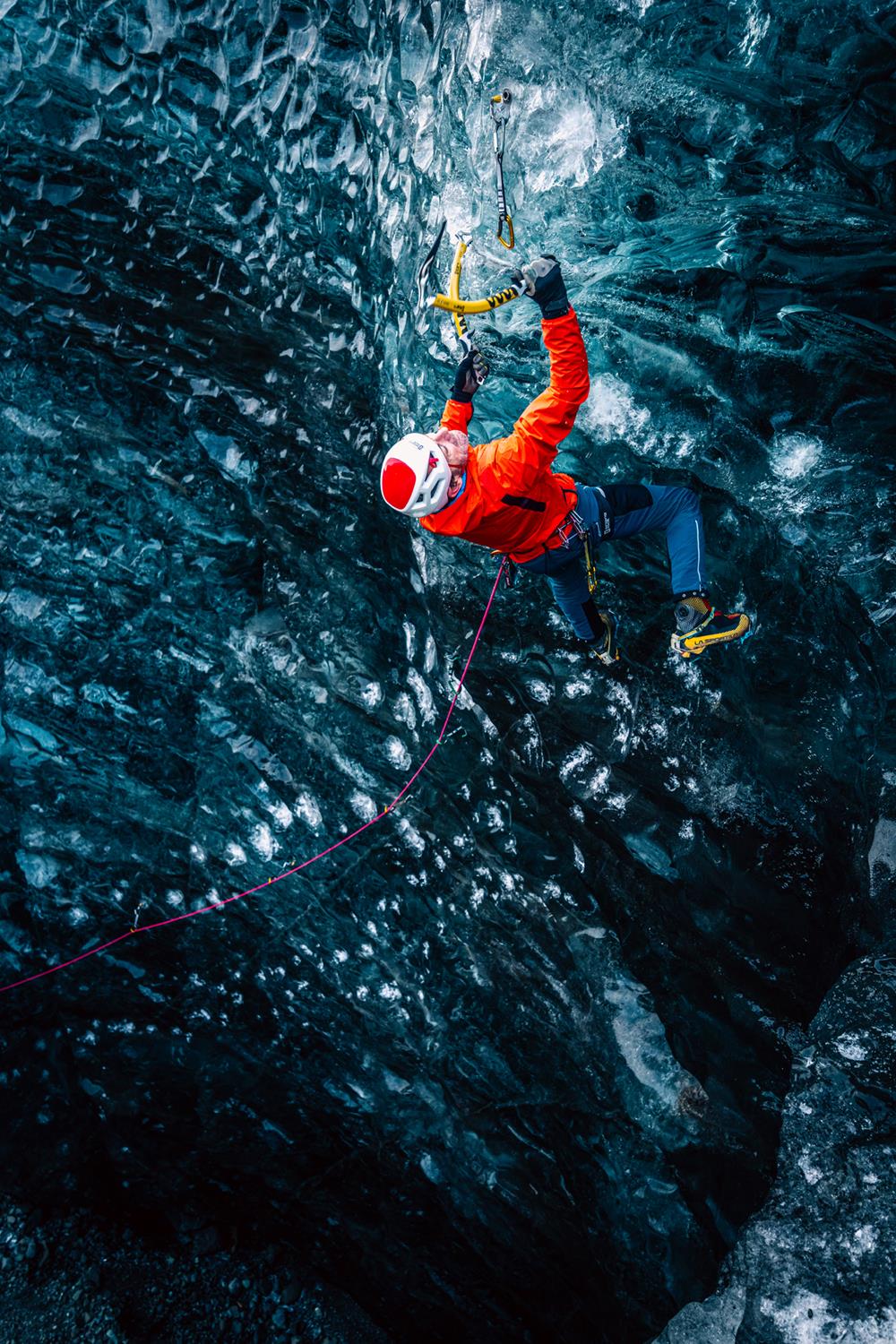
Vatnajökull: descending into hell (and climbing back out)
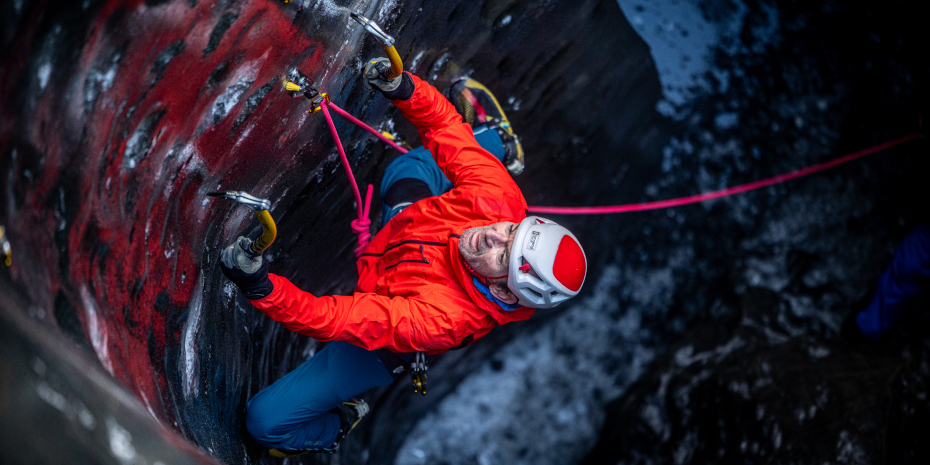
Are you curious what ice climbing in glacier moulins in Iceland is like?
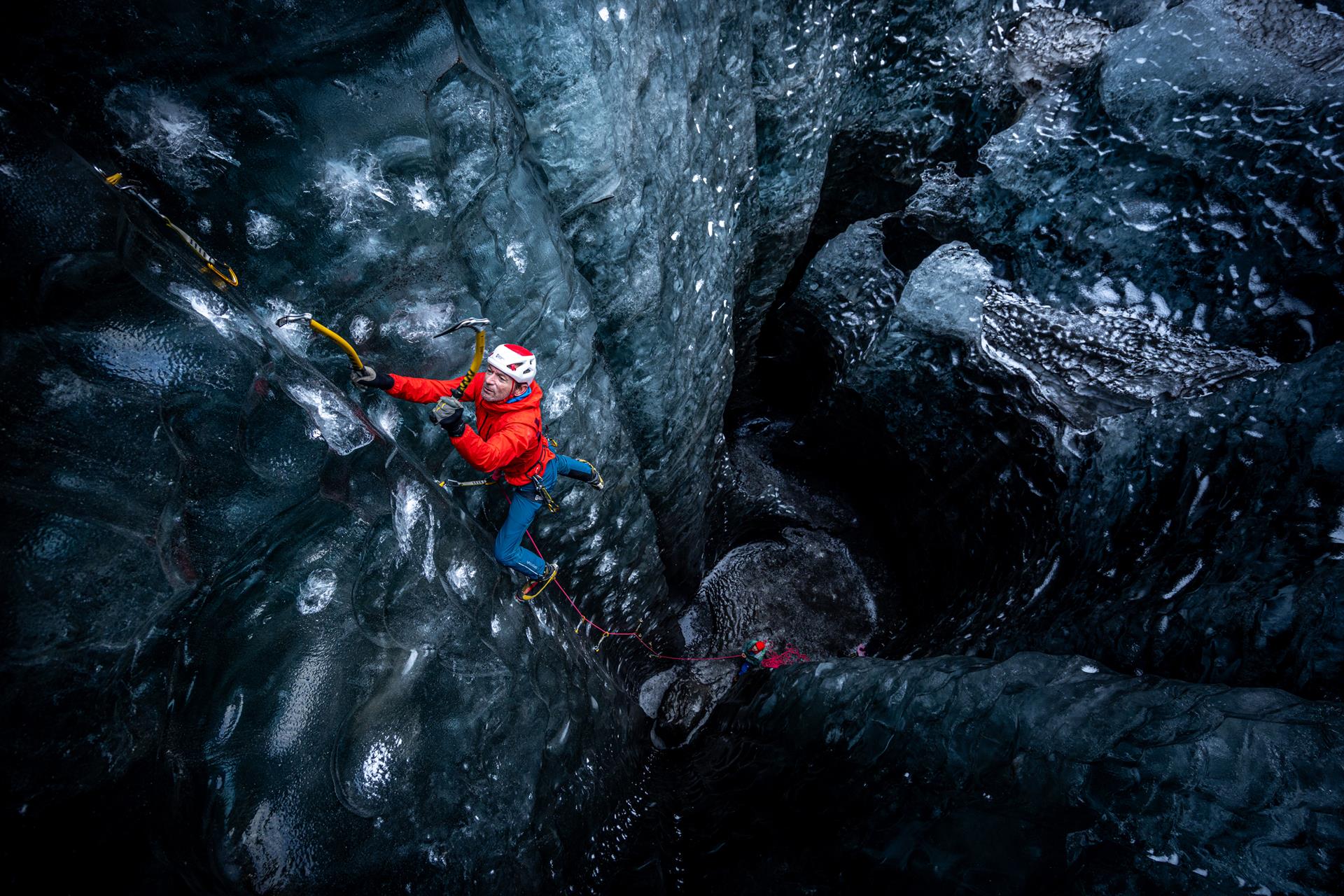
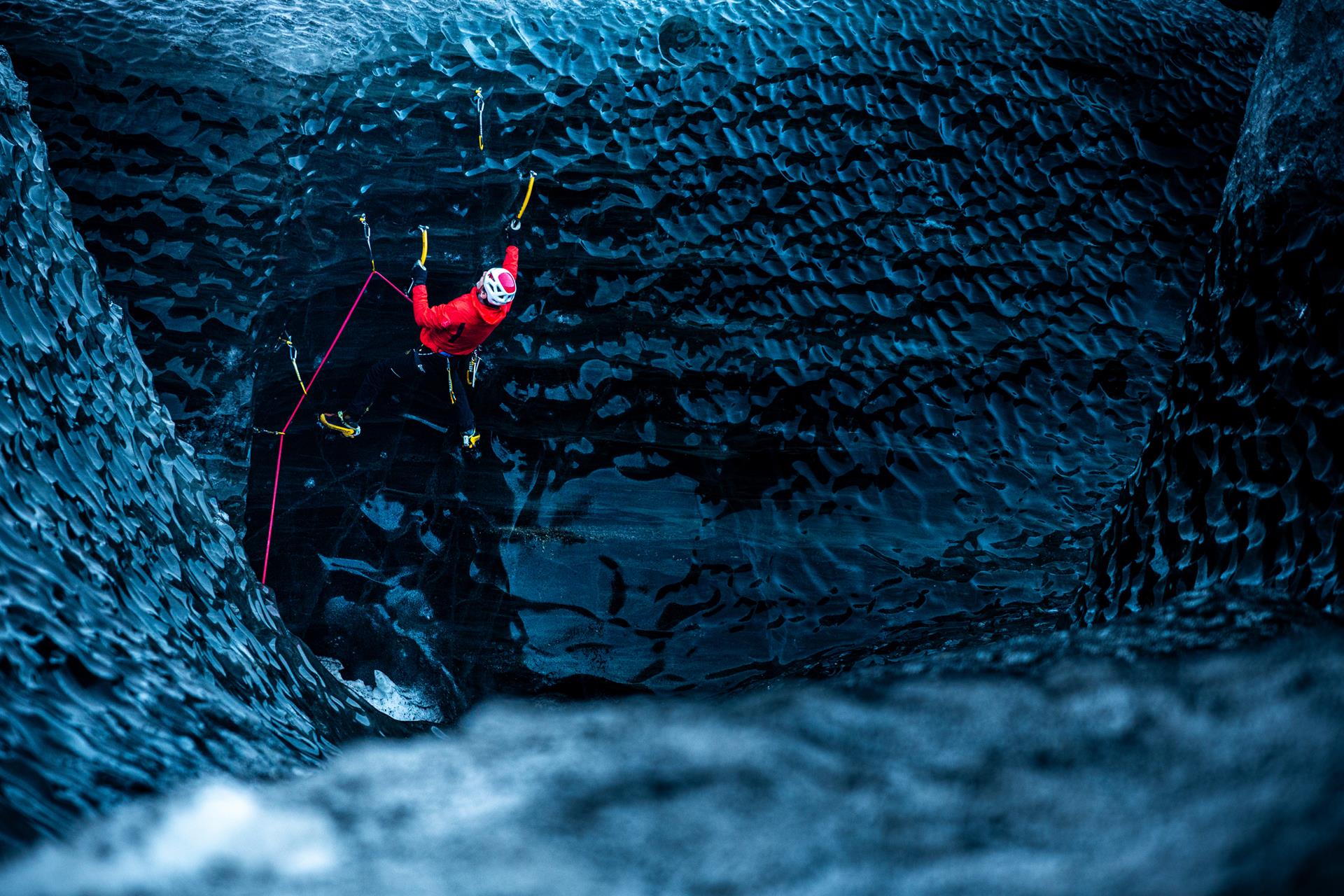
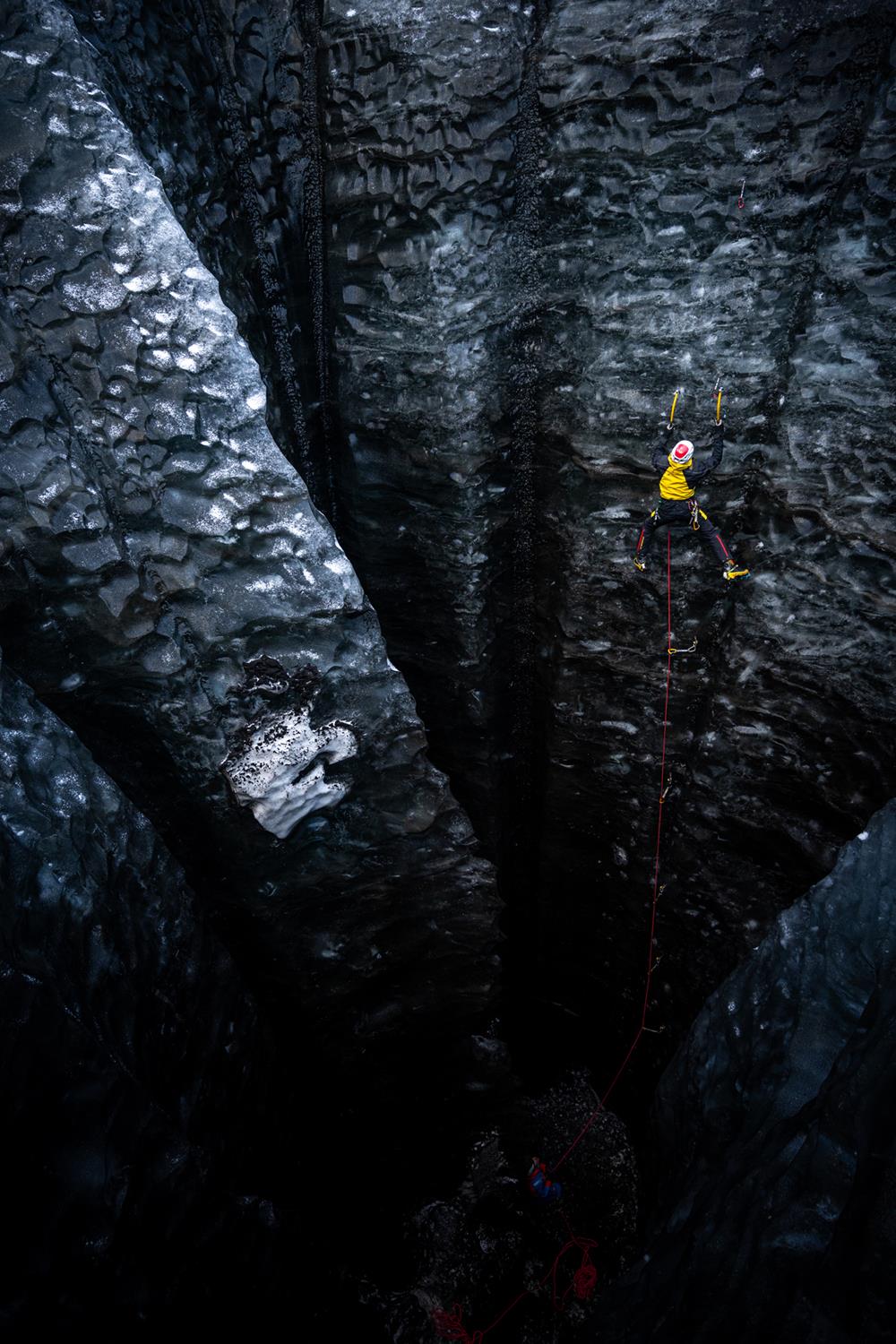
A moulin is a vertical, circular shaft or tunnel within a glacier. It forms when surface meltwater finds a crack or weak point in the ice and begins to drain down through it. (The name comes from the French word moulin – “mill”; the formation of these glacial shafts is often accompanied by a roaring sound reminiscent of a mill in operation.) To climb in moulins, you first have to rappel into the depths of the glacier, and then make your way back to the surface along smooth, solid ice.
Iceland is one of the best destinations for this unique form of ice climbing. At the beginning of the year, Singing Rock athlete Carlos “Citro” Logroño headed there, sharing his intense experiences with us.
The day I switched from rock to volcanic ice
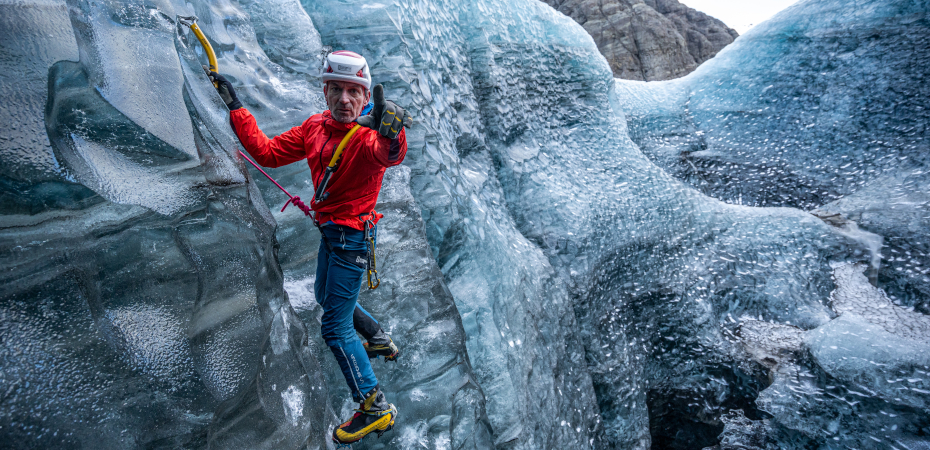
I’m a rock climber.
Overhangs that spit you off. Microscopic crimps and fingers silently crying. Warm limestone and sweaty sends.
But Iceland doesn’t give you warmth.
Iceland gives you ice.
And not just any ice.
It gives you Vatnajökull, the largest glacier in Europe. A white monster stretching out as if the planet had decided to put on armor.
And there I was, with my ice axes, my crampons and that mix of confidence and controlled stupidity that climbers need to keep saying this is a good idea.
Black ice: when the glacier doesn’t want to be pretty
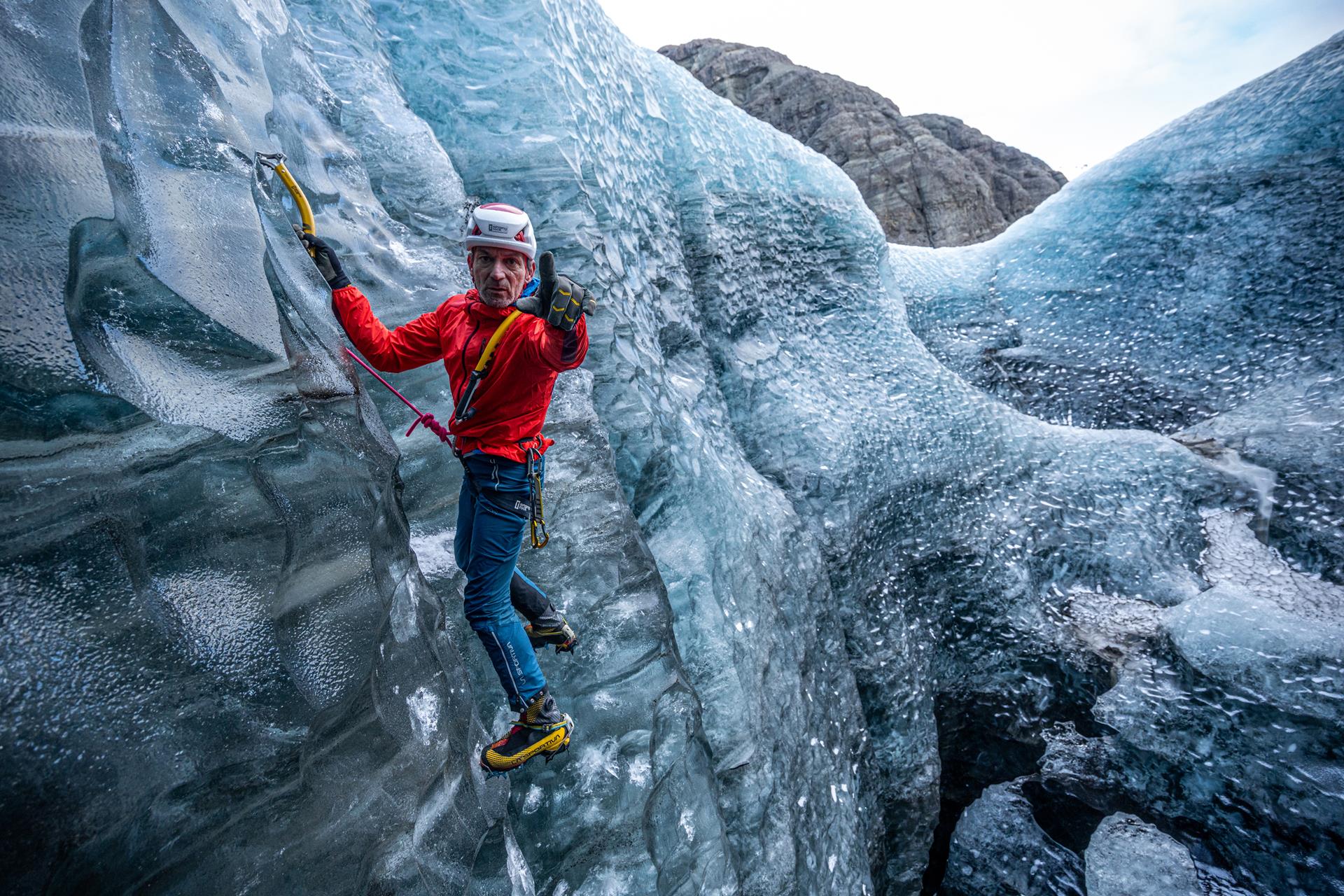
In the Alps, ice is crystalline, elegant, picture-perfect blue.
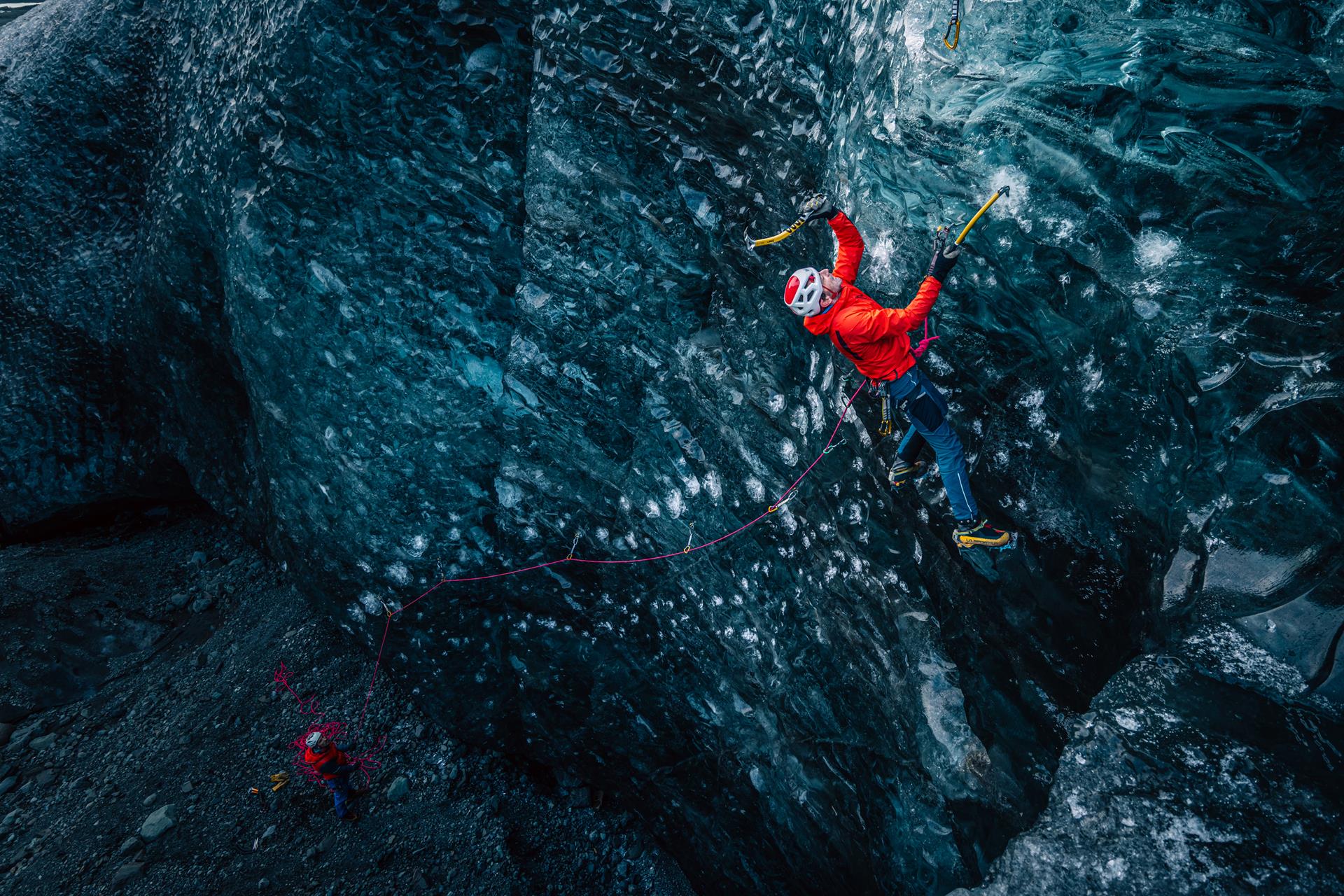
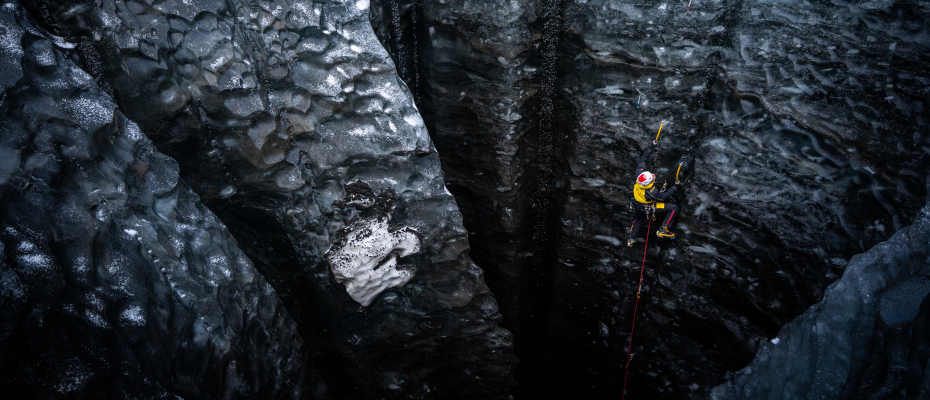
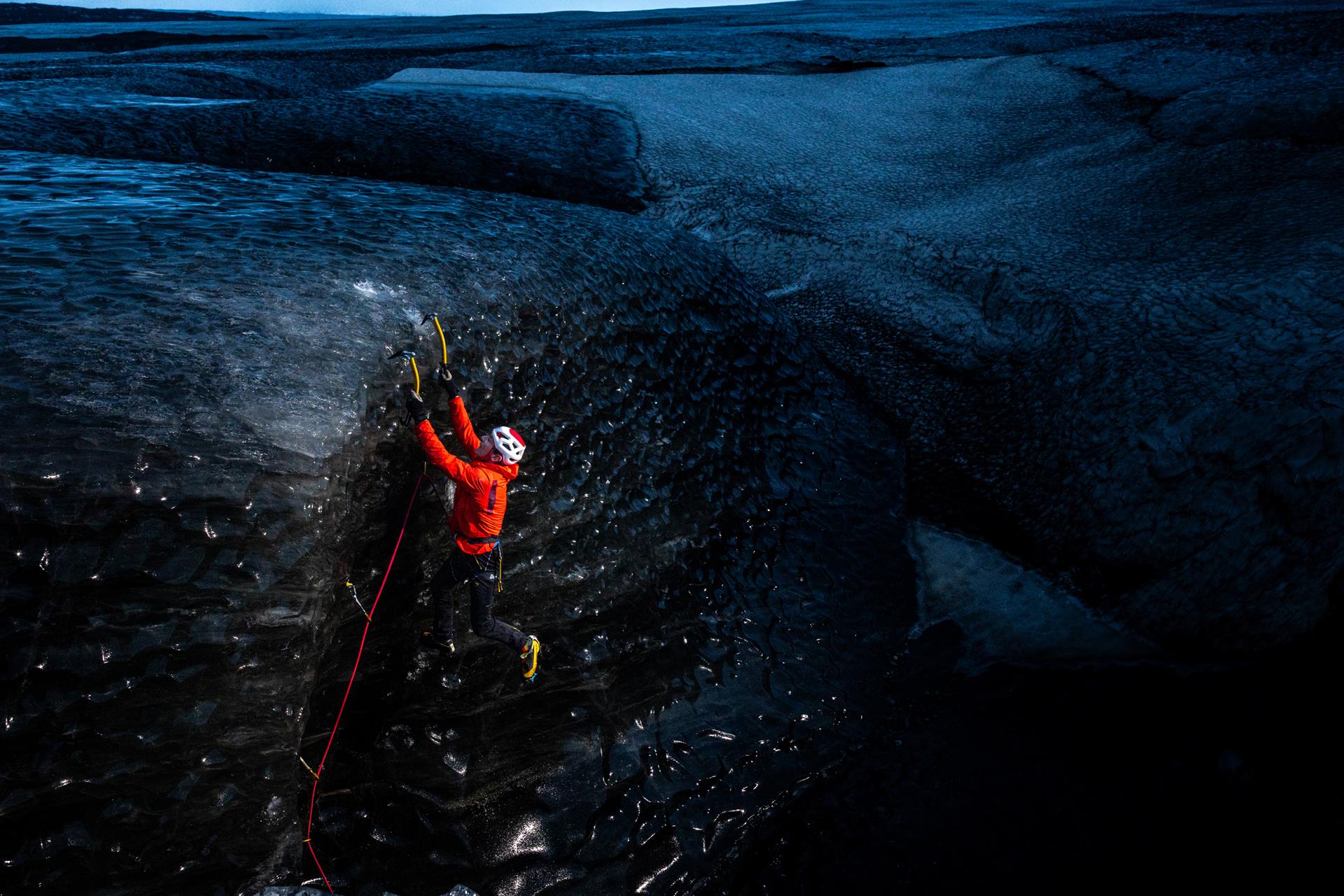
In Iceland, ice can be black.
Volcanic ash trapped in millennia-old layers. Dark layers cutting through the glacier like scars. This isn’t decorative ice. It’s geological ice. Compacted over centuries. Serious.
You swing your axe and the sound isn’t hollow or brittle. It’s deep. Low. As if the glacier clears its throat before saying: “Alright, you can climb… just don’t mess it up.”
And that’s where the game begins.
Descending into the dark (yes, literally into hell)
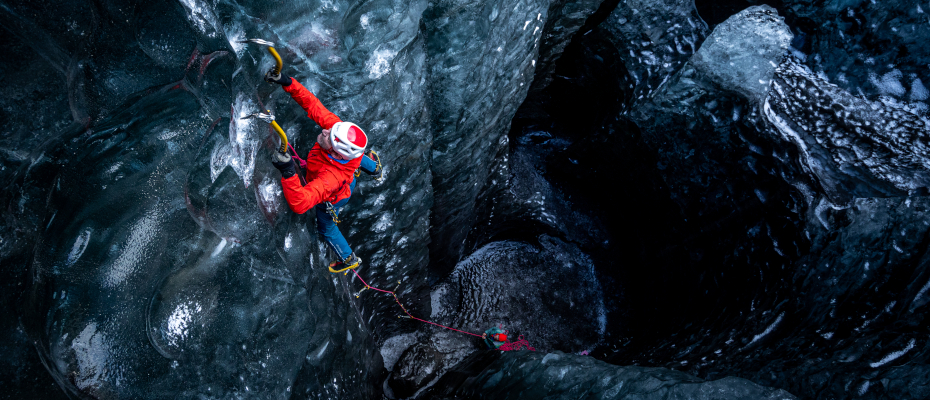 At some point someone said: „What if we go down that hole?“
I looked at it. Dark. Vertical. Deep.
That’s a moulin. A shaft carved by meltwater into the interior of the glacier. A natural drain into the frozen guts of the planet.
And of course, the sensible thing would’ve been to take a photo and move on.
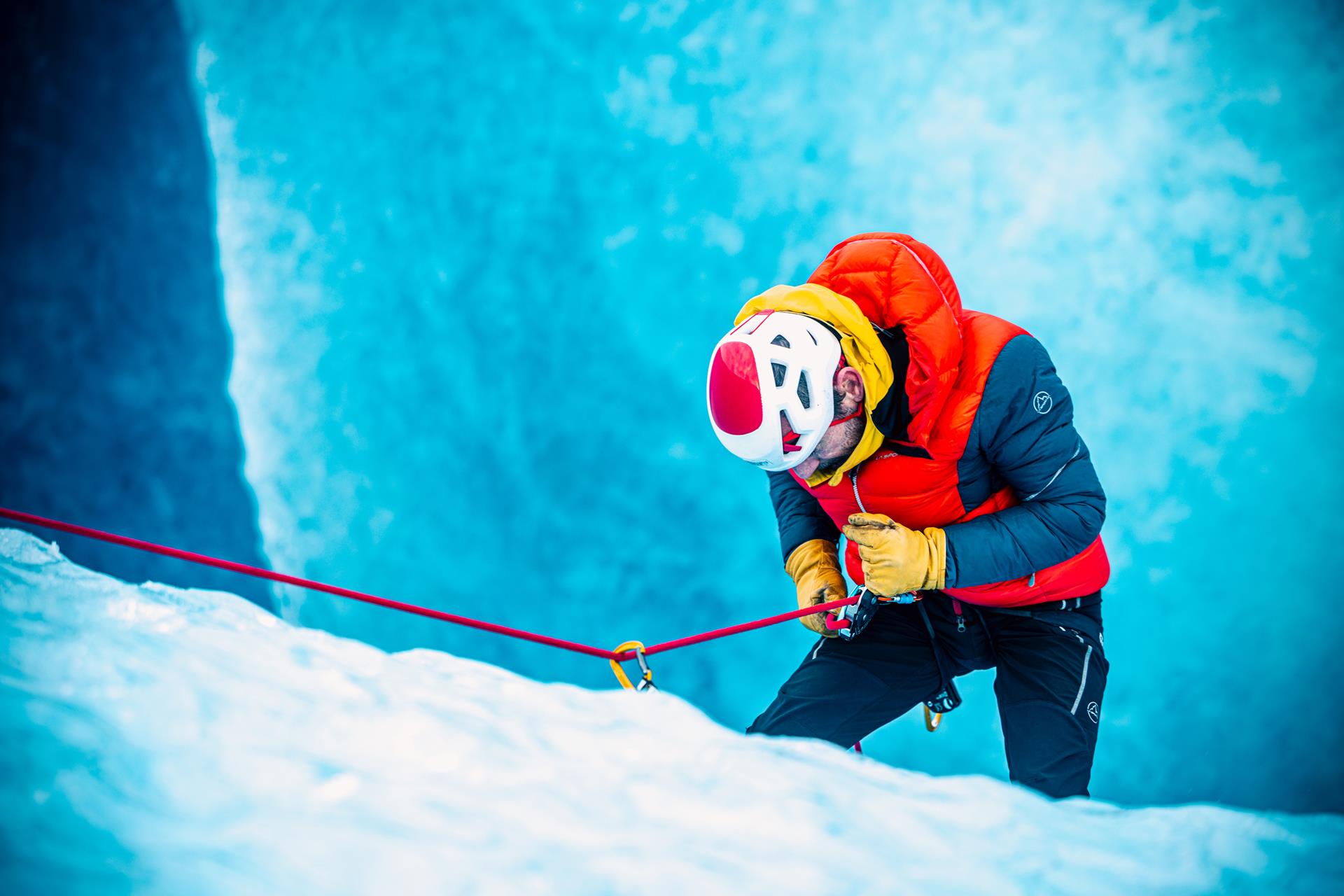
But no.We rappelled.
Descending into the dark.
And as I went down the rope, with the blue fading and the walls getting darker and darker, I had this absolutely technical and mature thought:
“We’re descending into hell… but with crampons.”
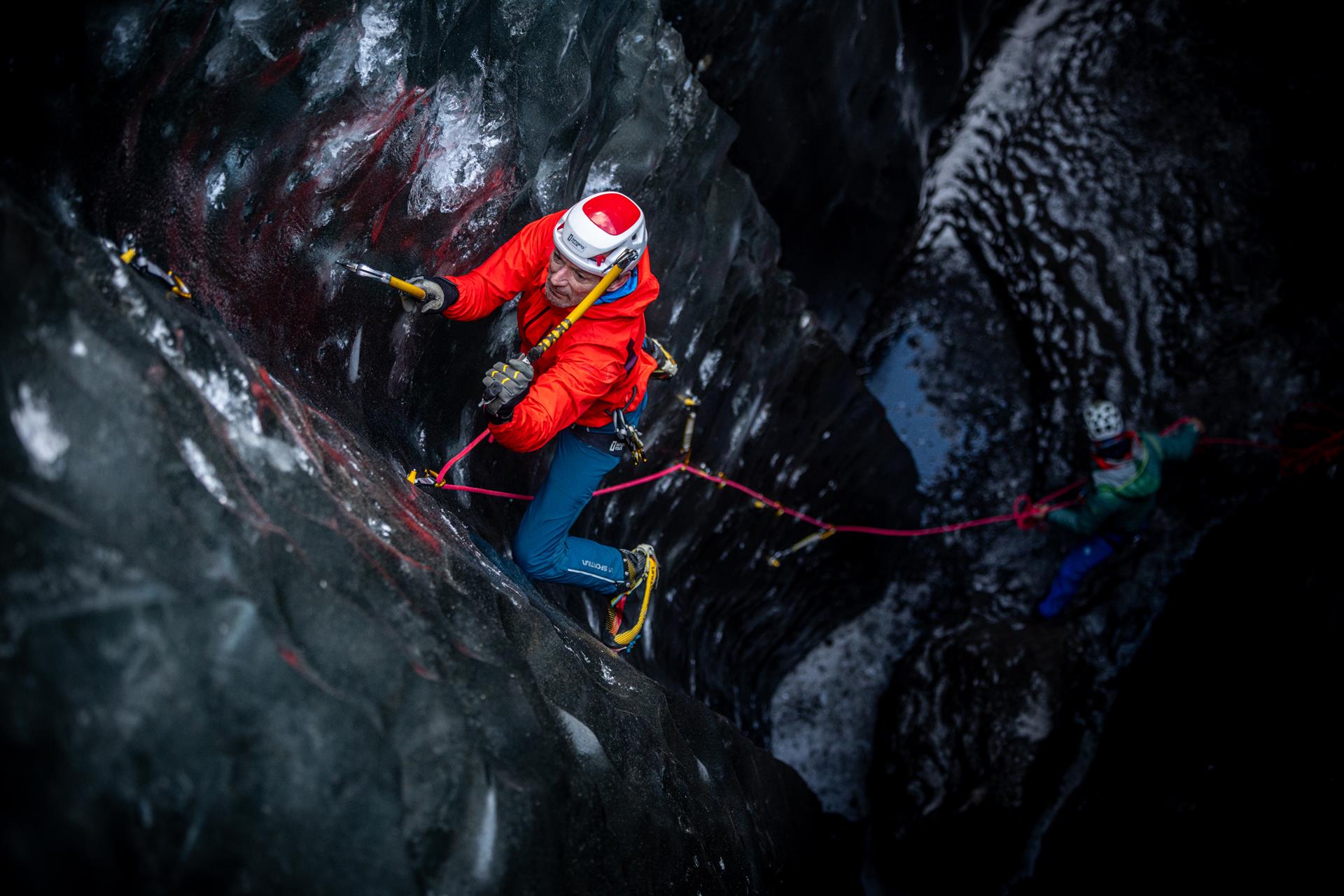
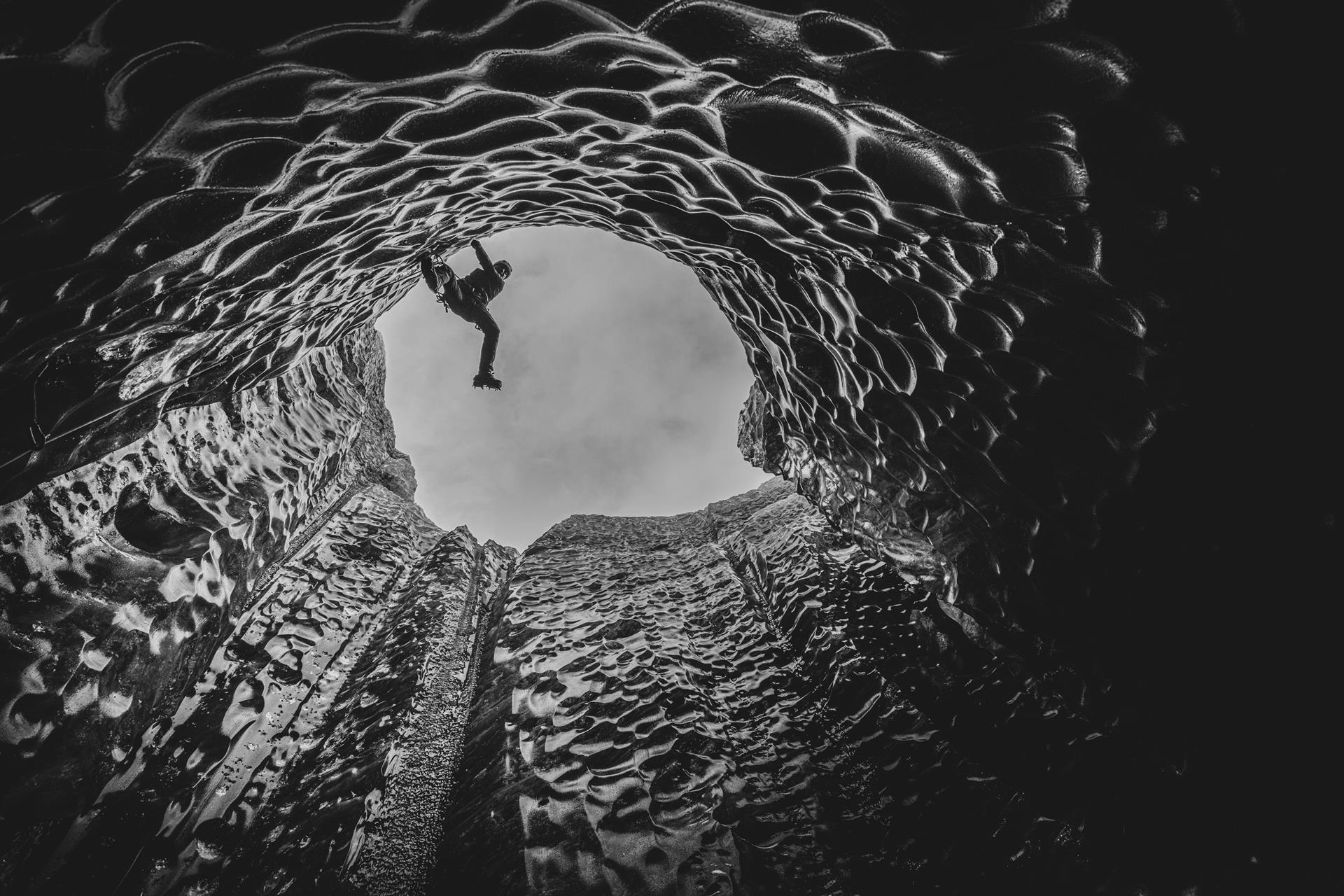
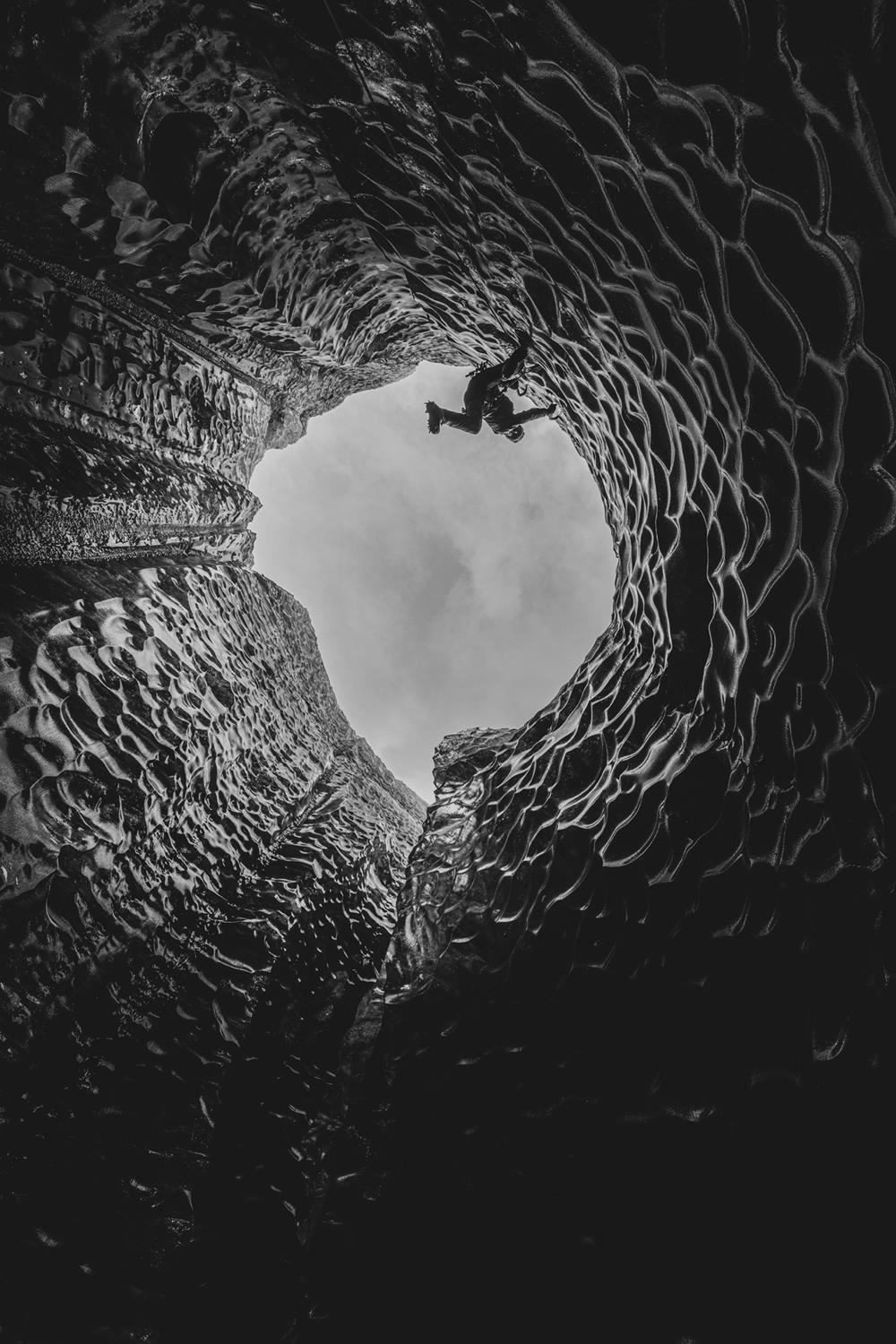
The echo changes. The light changes. The air is damp and cold. The ice is darker, denser. It feels like you’re inside a gigantic throat that breathes slowly.
And when you reach the bottom, you look up and see a small circle of distant light. That’s the exact moment you understand this is no longer tourism.
This is adventure.
And now… climbing out of hell
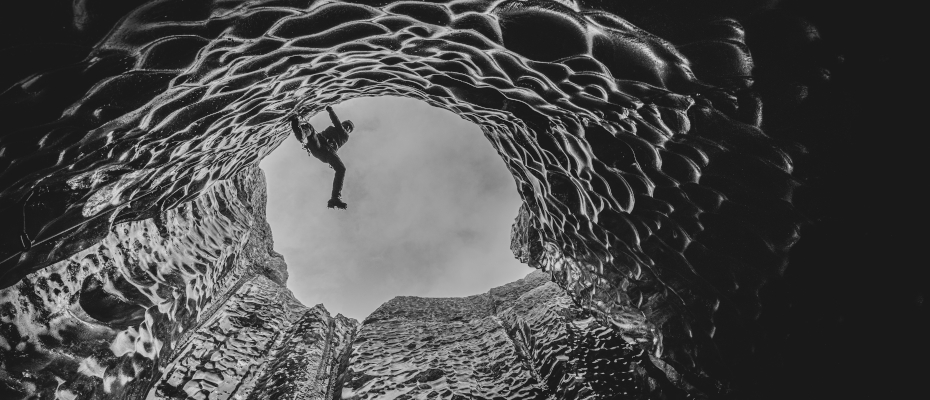
Here comes the good part.
You don’t go down just to walk back out.
You go down to climb out.
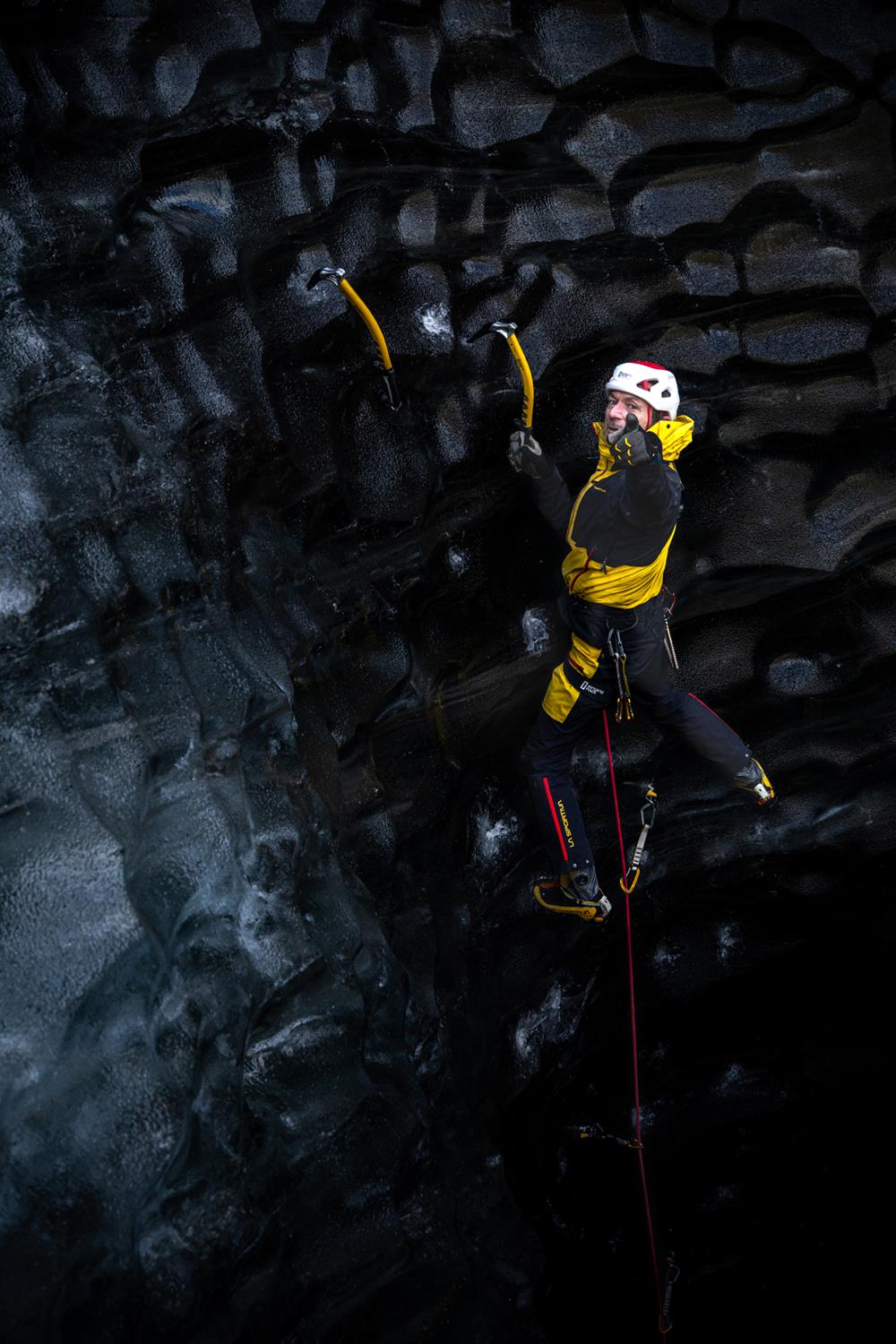
Left axe.
Right axe.
Clean kick.
Breathe.
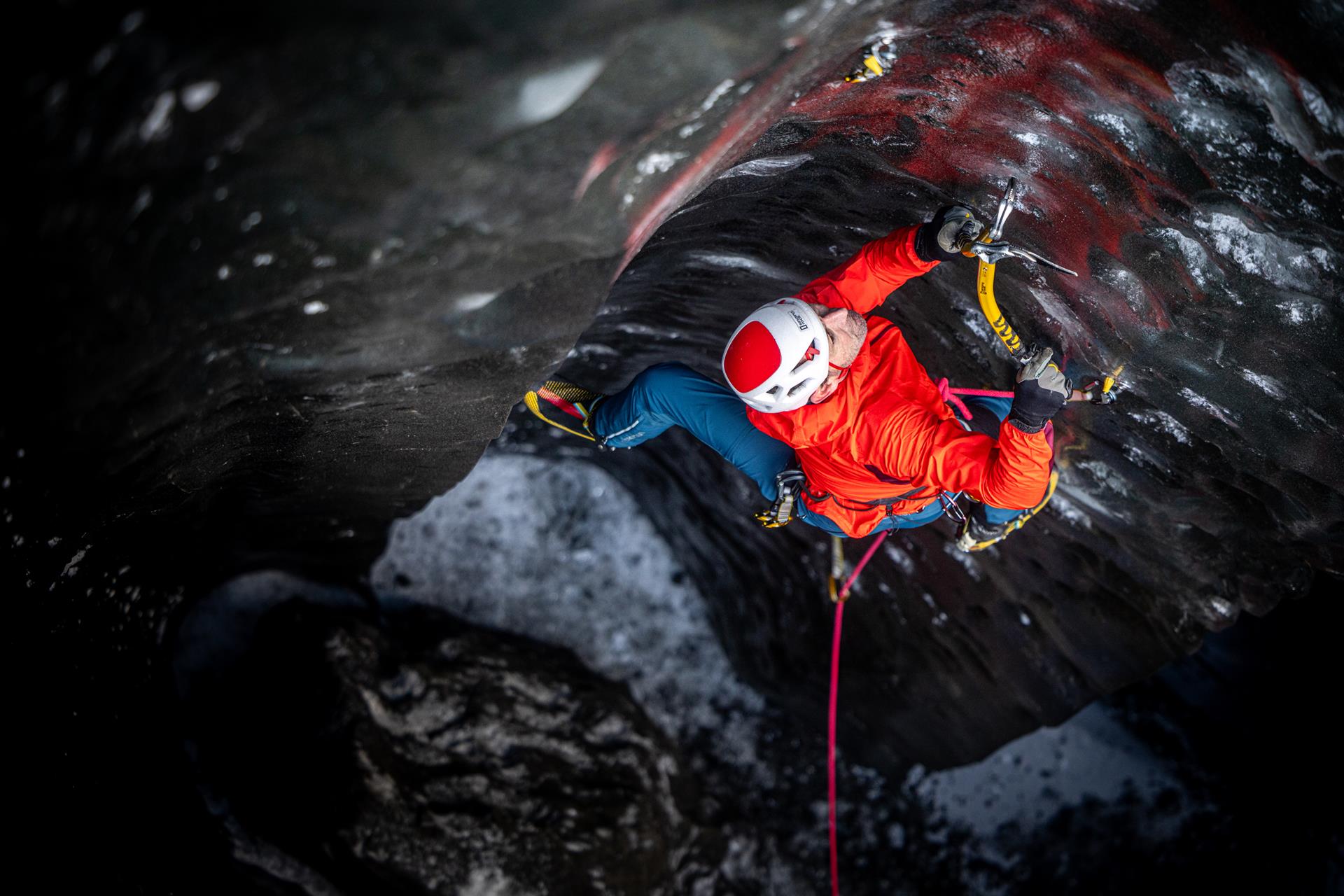
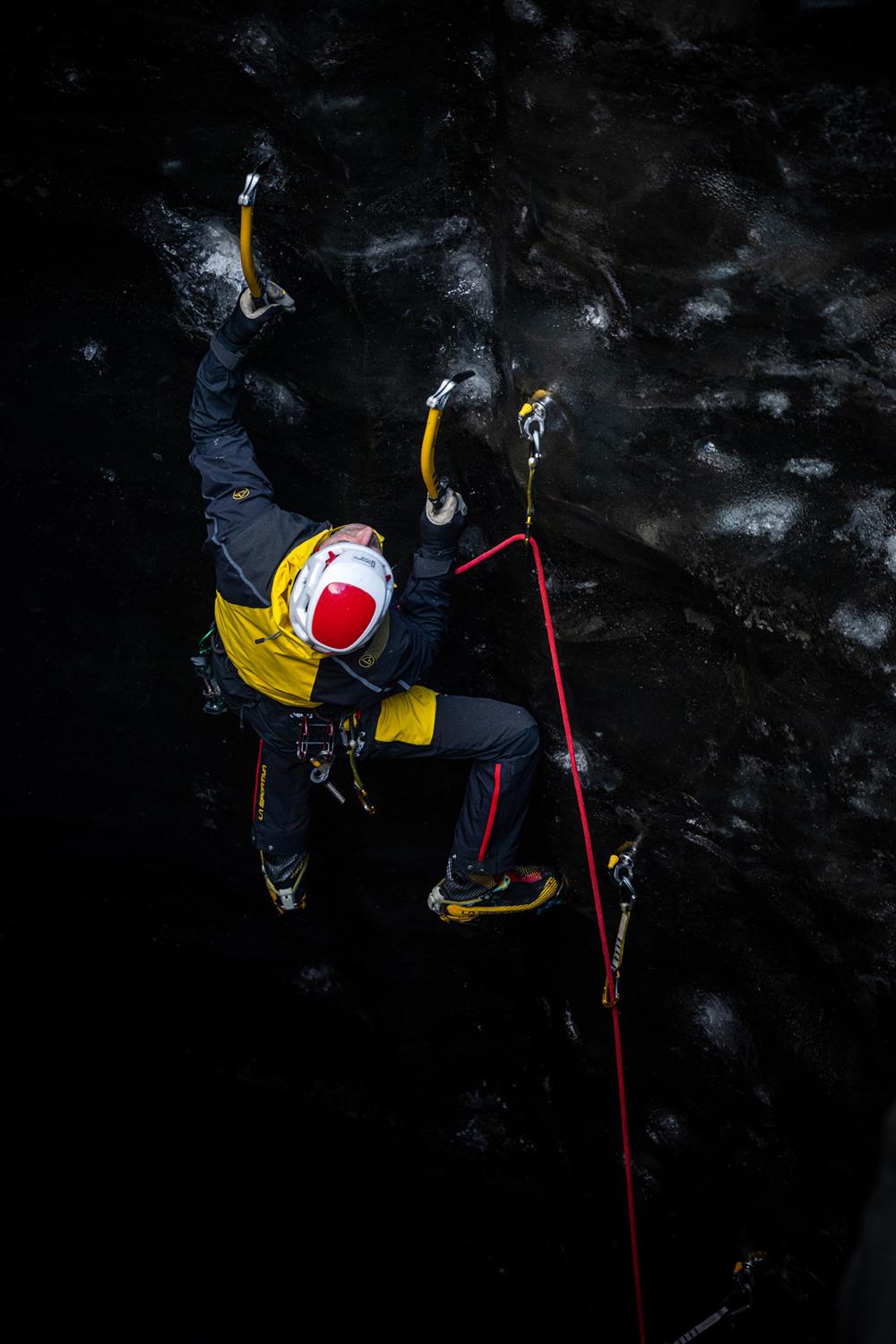
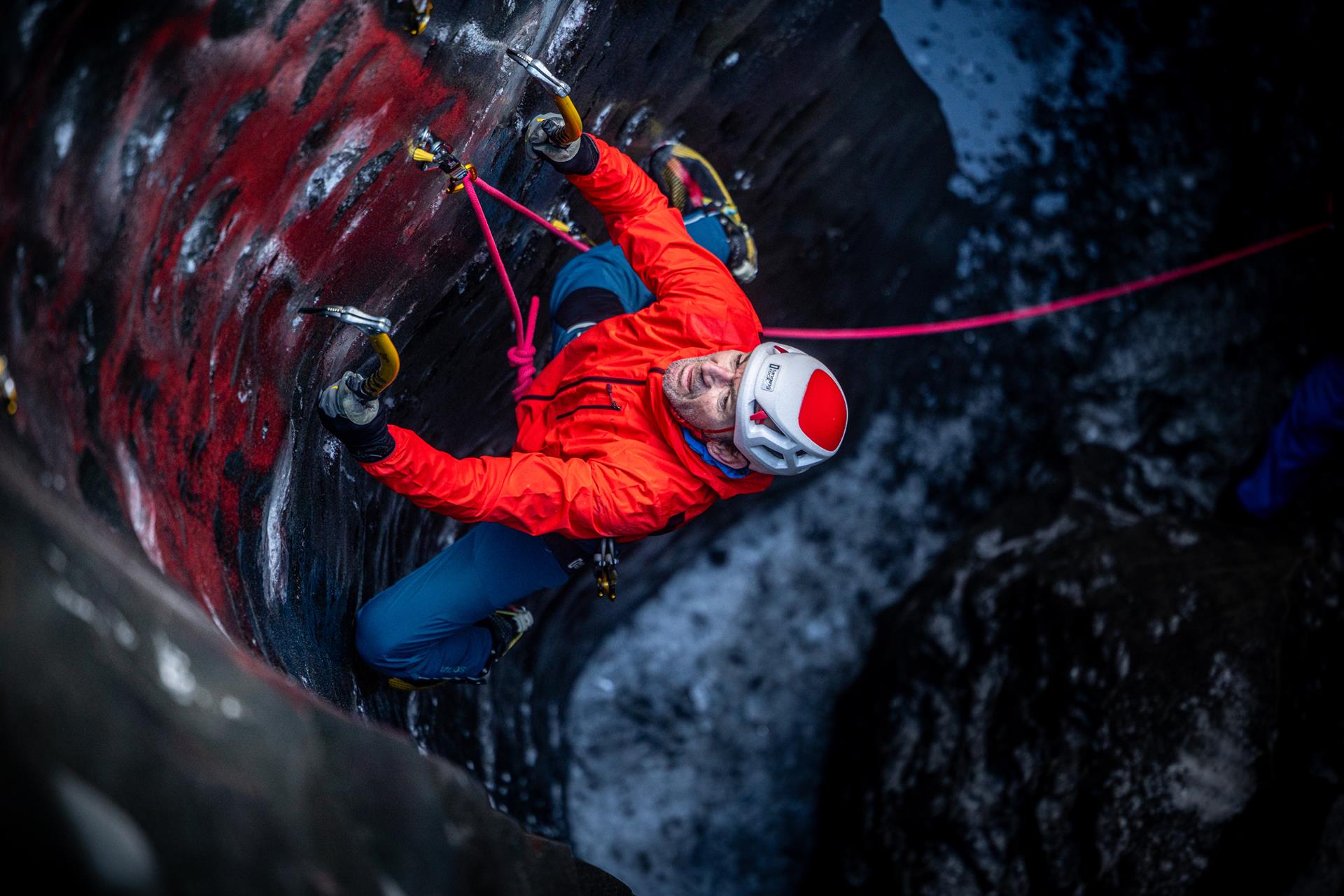
Climbing inside a moulin is different from anything I had done before.
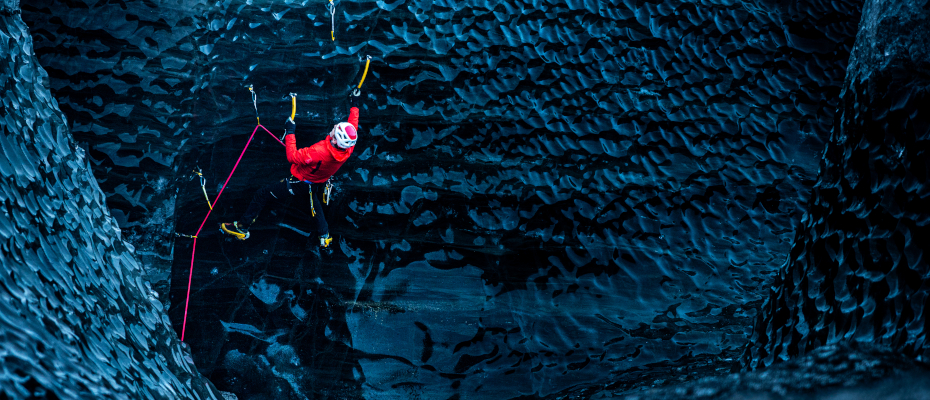
You’re not on an open vertical face. You’re in a tubular cathedral. The walls are concave. There is constant moisture. The ice is not fragile frozen waterfall ice; it is compressed, ancient glacier ice.
It’s not just about strength.
It’s surgical precision.
And mentally it’s brutal. You’re not looking at a valley. You’re not looking at a horizon. You’re looking at depth beneath your feet.
On a frozen waterfall the fear is height. In a moulin the fear is depth.
And that changes everything.
Frozen waterfalls vs moulins: let’s be clear, they’re not the same
1. The ice
Frozen waterfall:
Formed by falling water that freezes.
More aerated.
Columns, daggers, delicate structures.
Changes a lot with daily temperature.
Moulin (glacier):
Structural glacier ice.
Dense, compact.
With dark volcanic layers.
Part of the glacier’s body.
On a frozen waterfall you break surface.
In a moulin you dialogue with ancient mass.
2. The movement
Frozen waterfall: clear line, open exposure, valley below.
Moulin: internal climbing, enclosing walls, constant moisture, almost claustrophobic feeling.
On a frozen waterfall you fight something ephemeral.
In moulins you step inside something that existed before you knew how to walk.
3. Psychology
Frozen waterfall = vertigo.
Moulins = introspection.
On a frozen waterfall you feel spectacle.
In a moulin you feel silence.
And sometimes that silence weighs more than the void.
Real technique: what I learned in there
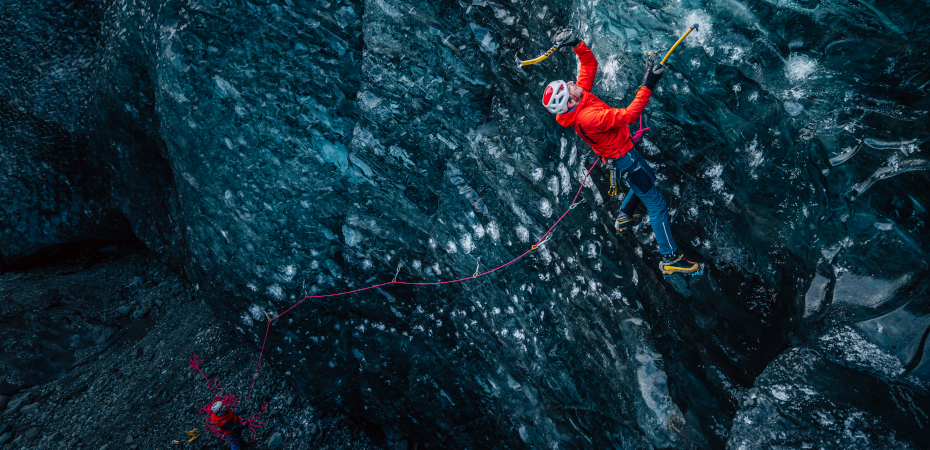 Fewer swings, more precision.
Place your crampons, don’t kick.
Keep a steady rhythm so you don’t freeze.
Place your screws carefully. No improvisation here.
Glacier ice rewards finesse. It punishes impulsiveness.
It’s like climbing with an ancient judge watching every move.
When gear isn’t just for show
In Iceland I understood something very simple:
Here gear isn’t about style. It’s elegant survival.
You need layers that work when wet. You need real wind protection. You need mobility without losing warmth. Because when you come out of the shaft and the wind hits your face, there’s no margin for error.
Inside the moulin you sweat.
Outside you freeze.
If your gear fails, your focus disappears. And on ice, focus is everything.
What you take with you when you come out
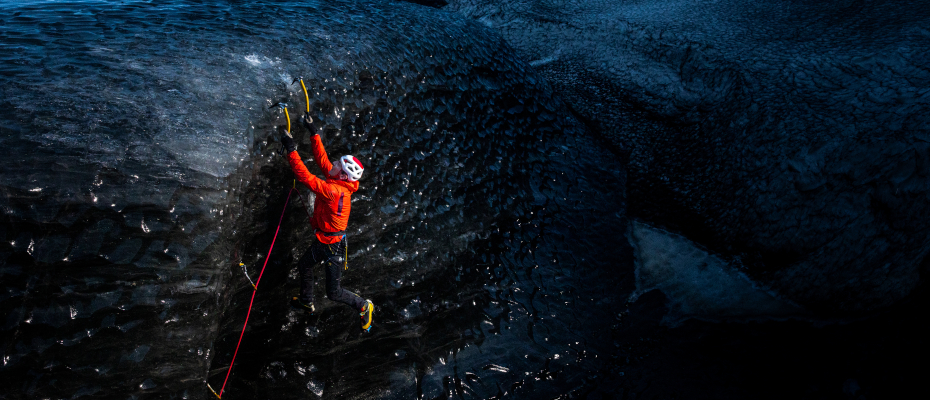
When I came out of the moulin, covered in frost, with pumped forearms and that smile where you’re not sure if it’s happiness or relief, I understood something.
On rock you often conquer.On a glacier you conquer nothing.
You ask permission.
And if it’s granted, it lets you descend into hell…and climb back out as if you were the protagonist of your own absurd and epic film at the same time.
Vatnajökull is not an activity.
It’s a conversation with the planet.
And when black ice speaks to you, you don’t come back the same.
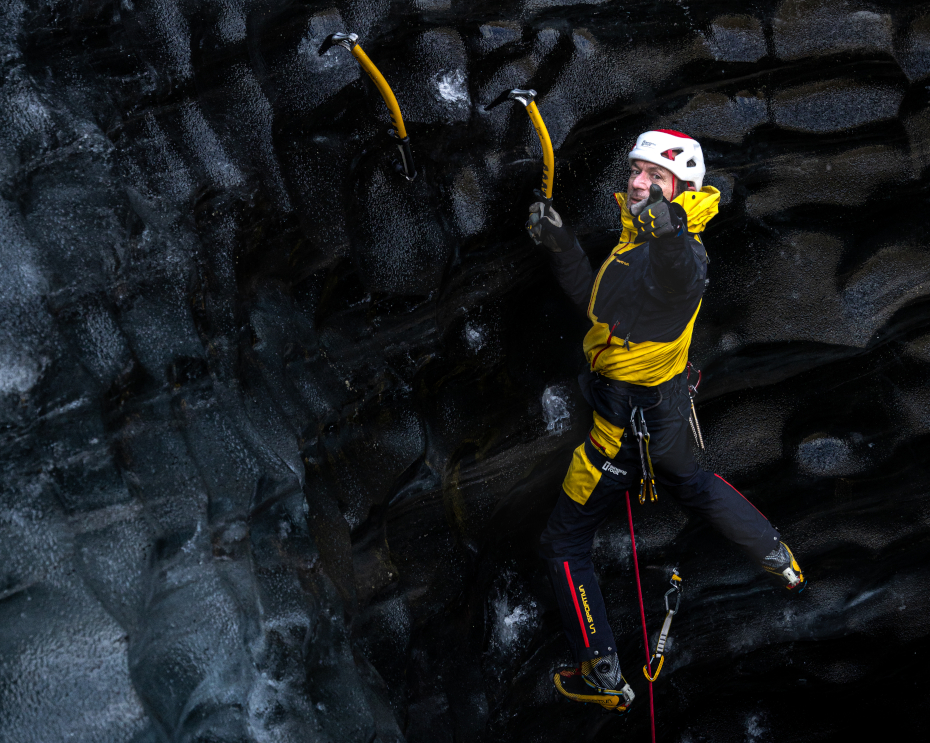
PS: Grading glacier climbing is almost impossible compared to frozen waterfall climbing. The big difference is that when you climb a frozen waterfall or a wall you see it before starting. Here you see nothing until you lean over, and even then only part of it, because you can’t tell if it’s vertical or overhanging. But it might be the purest form of tool climbing there is. A mix of ice climbing and dry tooling.
 More
More