SO/LO/VE – Lumír Fajkoš, Gekón 11- (8c) LRS
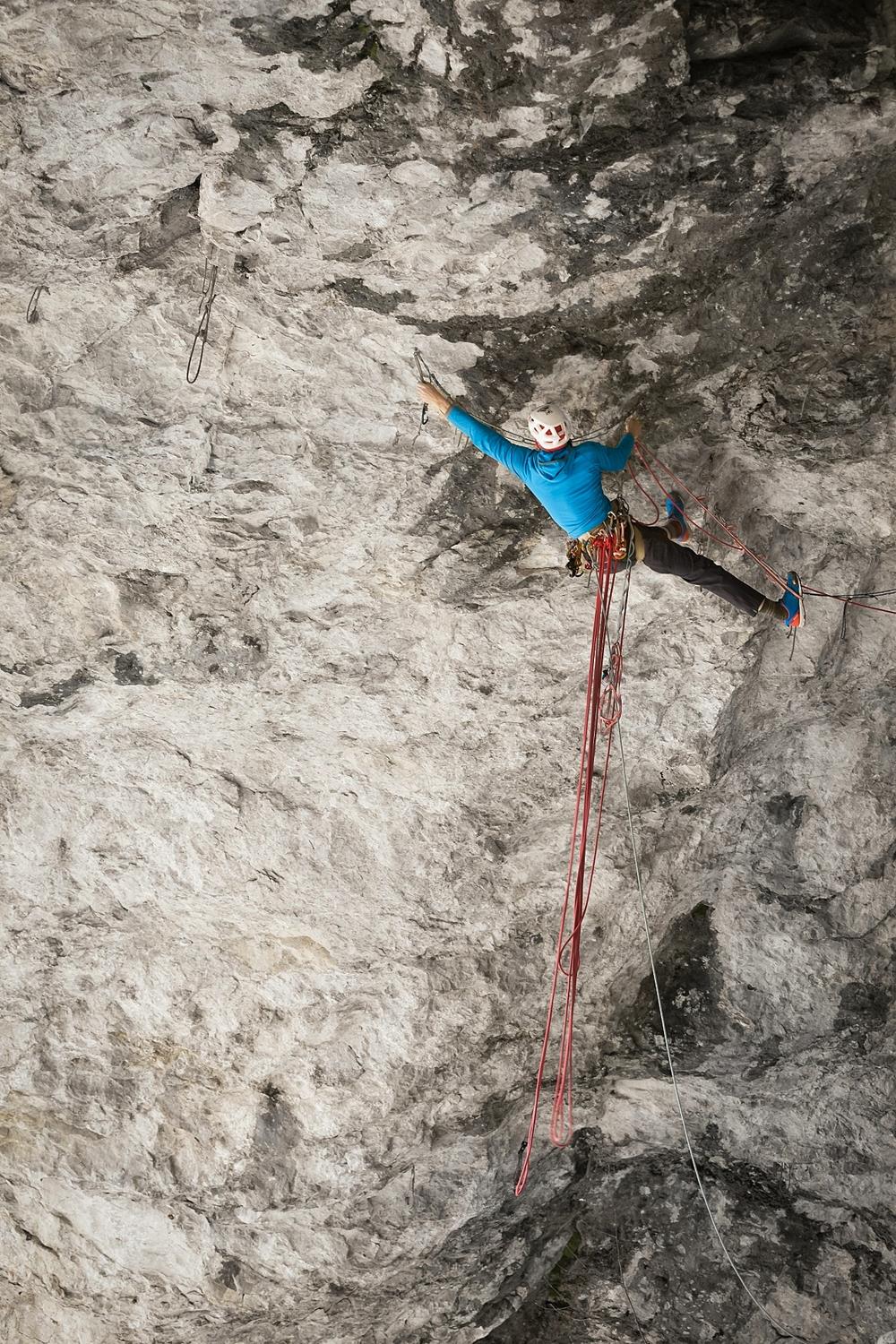
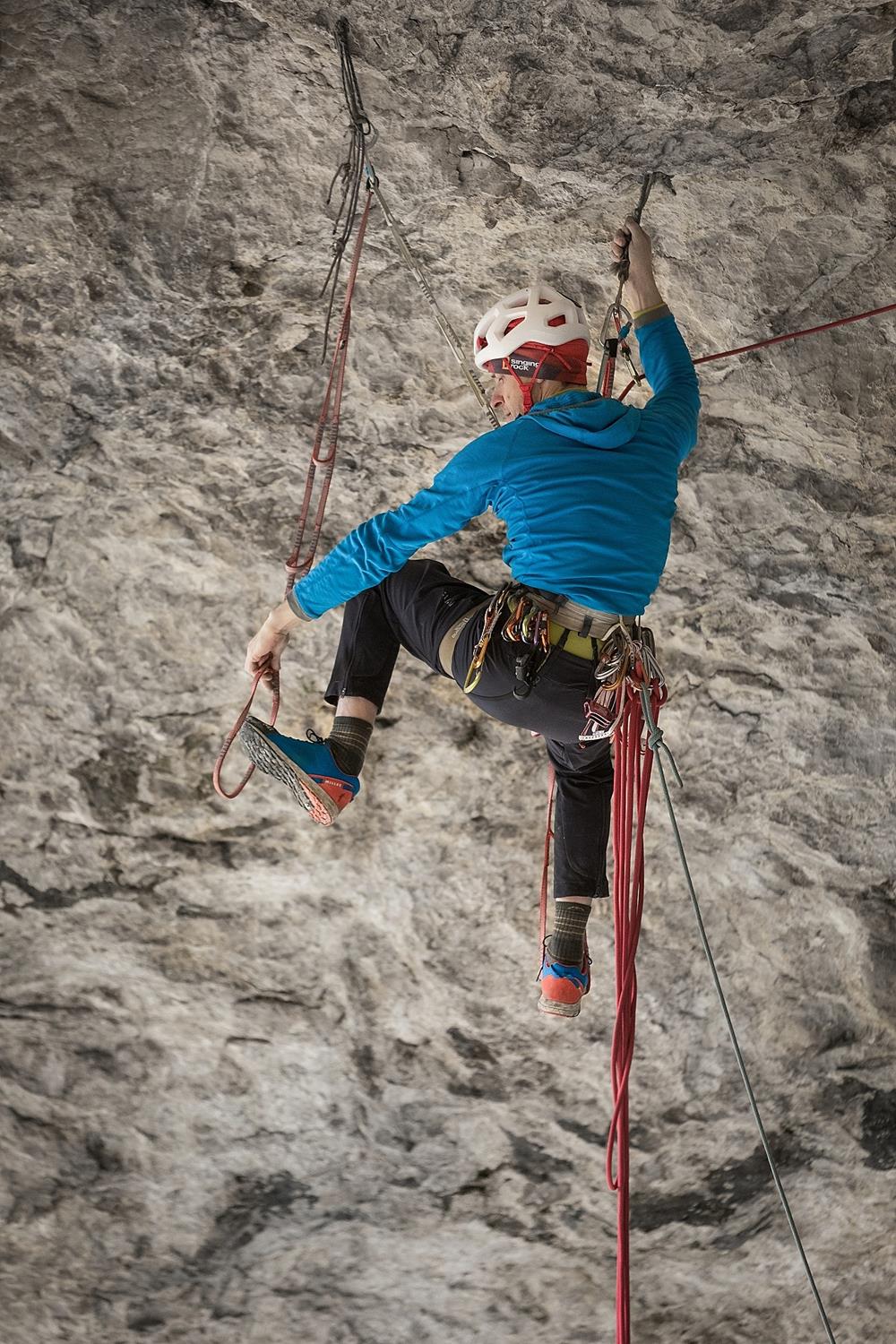
For the younger ones and others who don’t like reading long texts: after two years and two fractures I managed to climb my hardest route, Gekón 11-, and I did it as a (Lead Rope Solo).
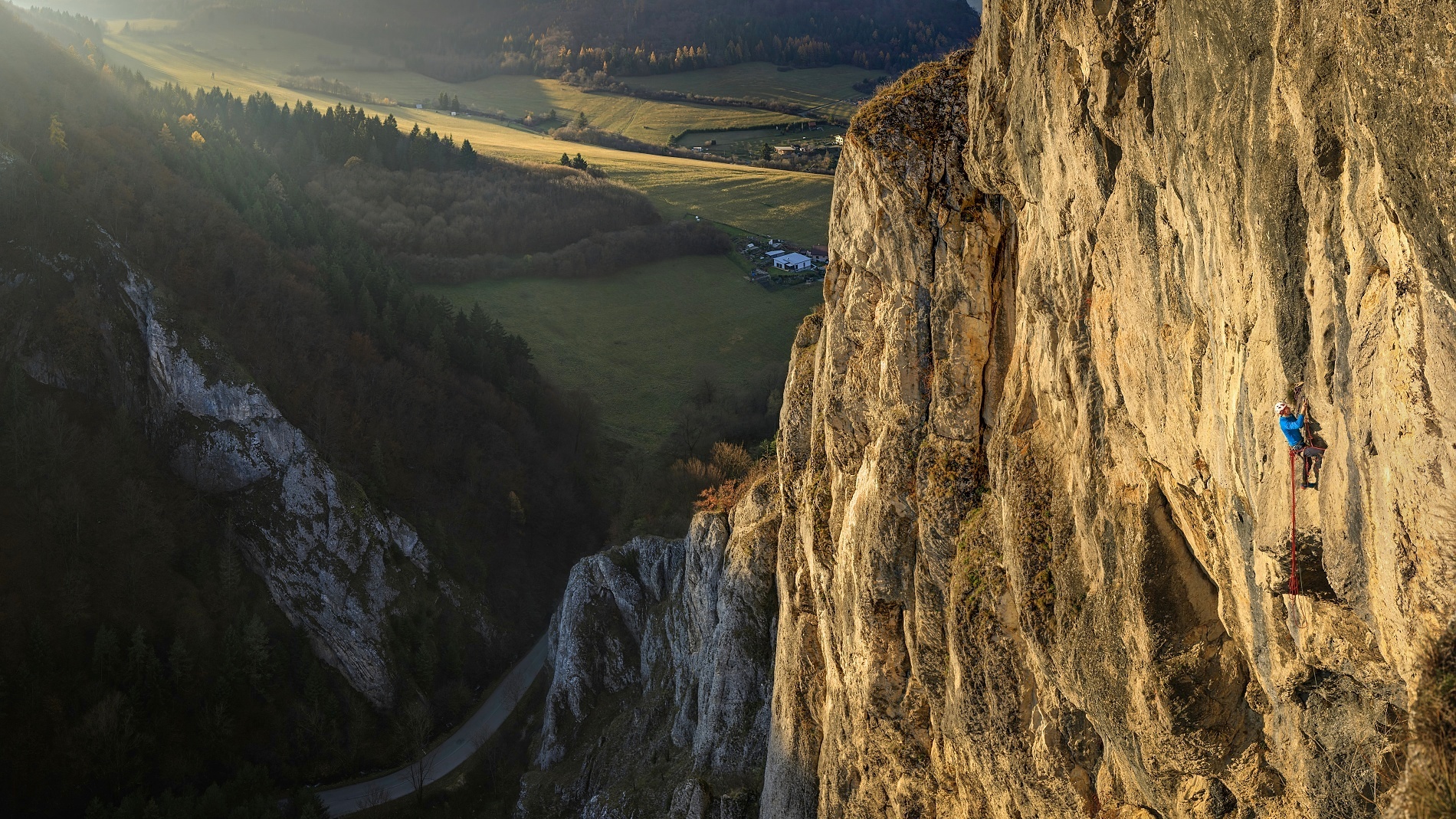
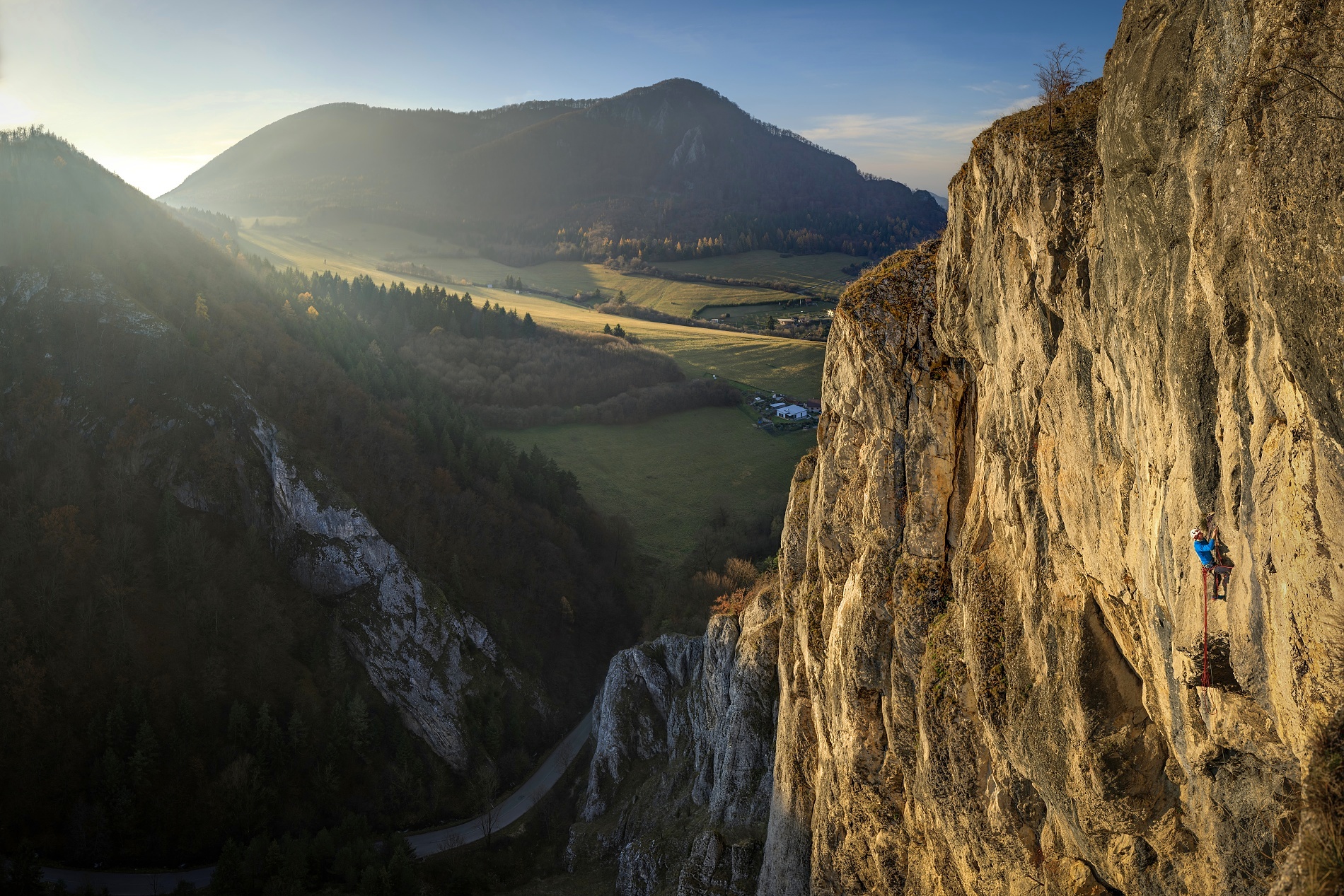
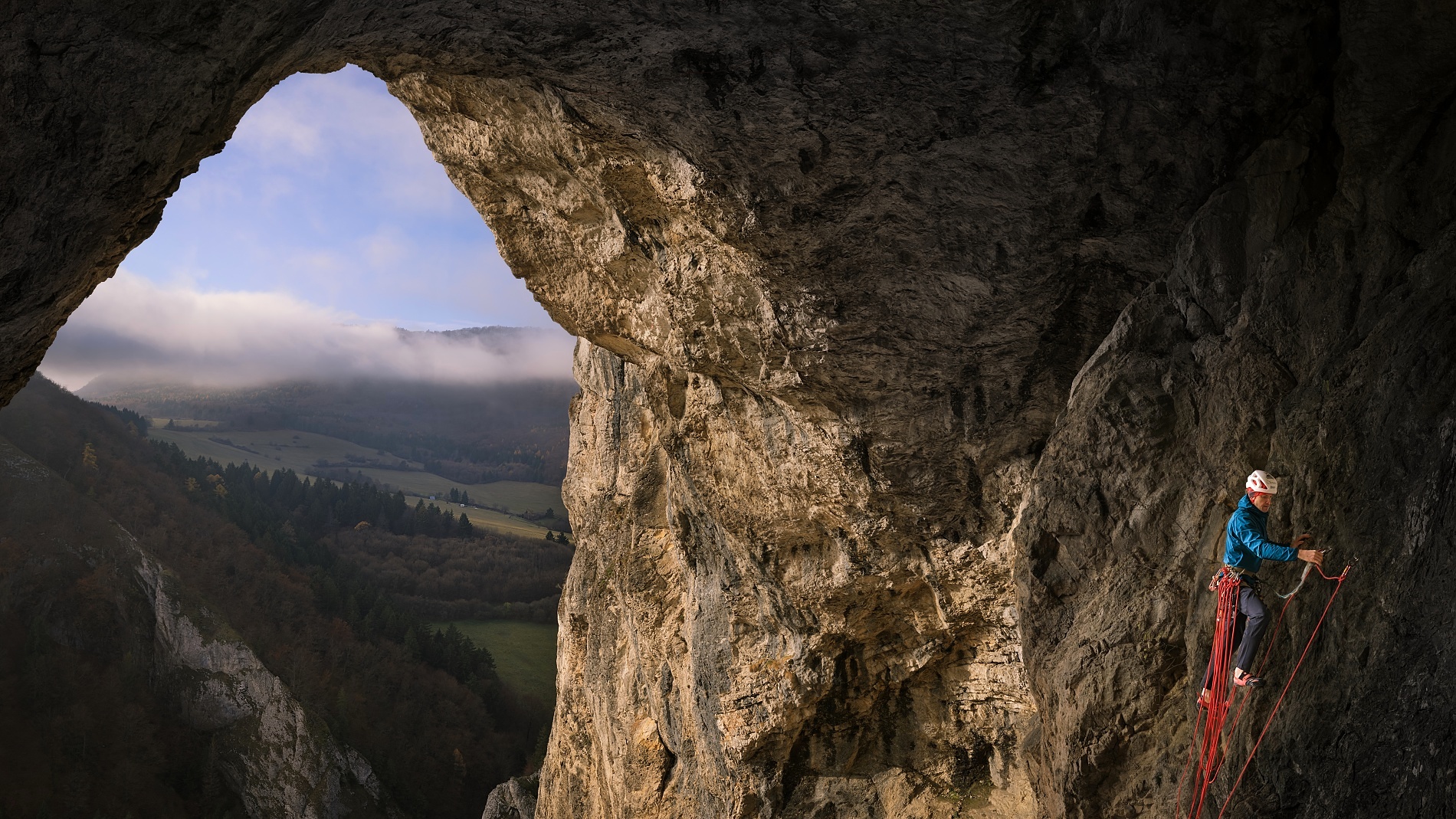
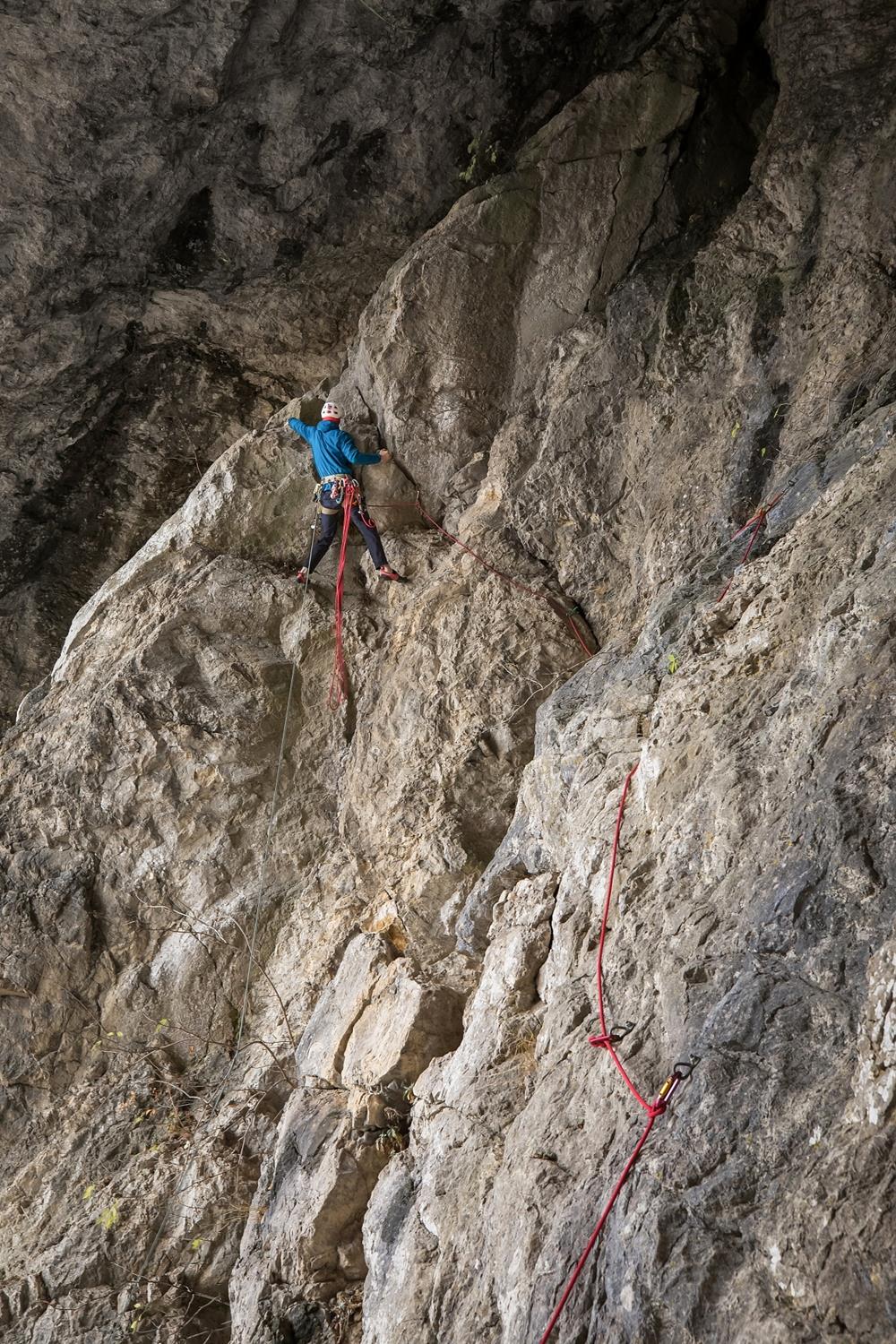
For everyone else: this is a route from 2009 on the lower Gothic Wall (Gotická stena) in Manín, Slovakia, created by Stano Klimo. It’s a sport route on limestone, so not something that would normally be my target for a roped solo. Firstly, single‑pitch routes didn’t really motivate me, and they still don’t. Secondly, it is a touched-up route, which also puts me off a bit. And thirdly, I had never climbed this difficulty, either RP or PP. However, it came about and developed by chance. How else? One summer weekend I was sick and home alone. With three small children, this doesn't happen often, so I "had to" go somewhere despite my cold. I remembered Šof, who once mentioned that the wall could be bypassed and rappelled down. So, I set out to see if it can be my first 8c, or if it suits me at all.
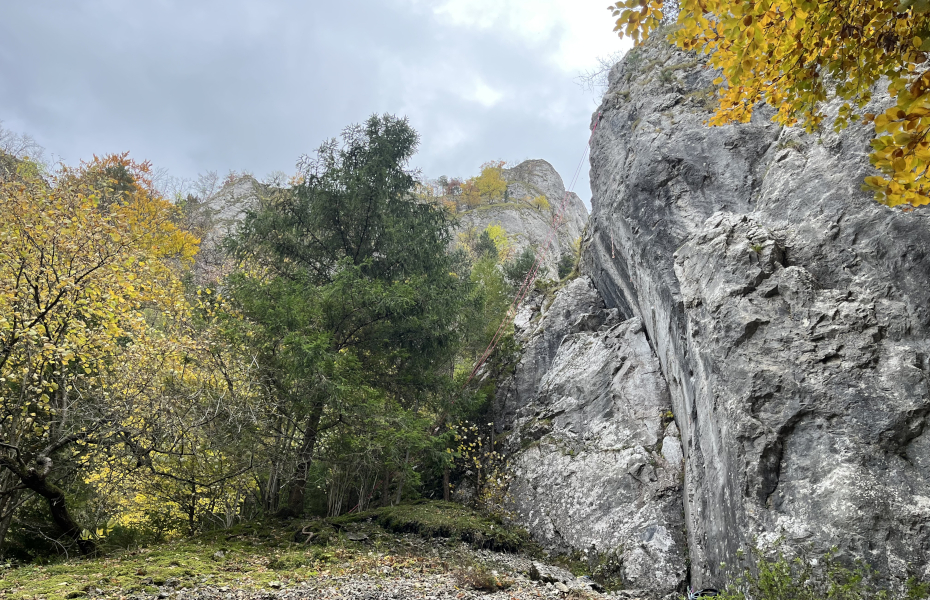 Ghotic Wall
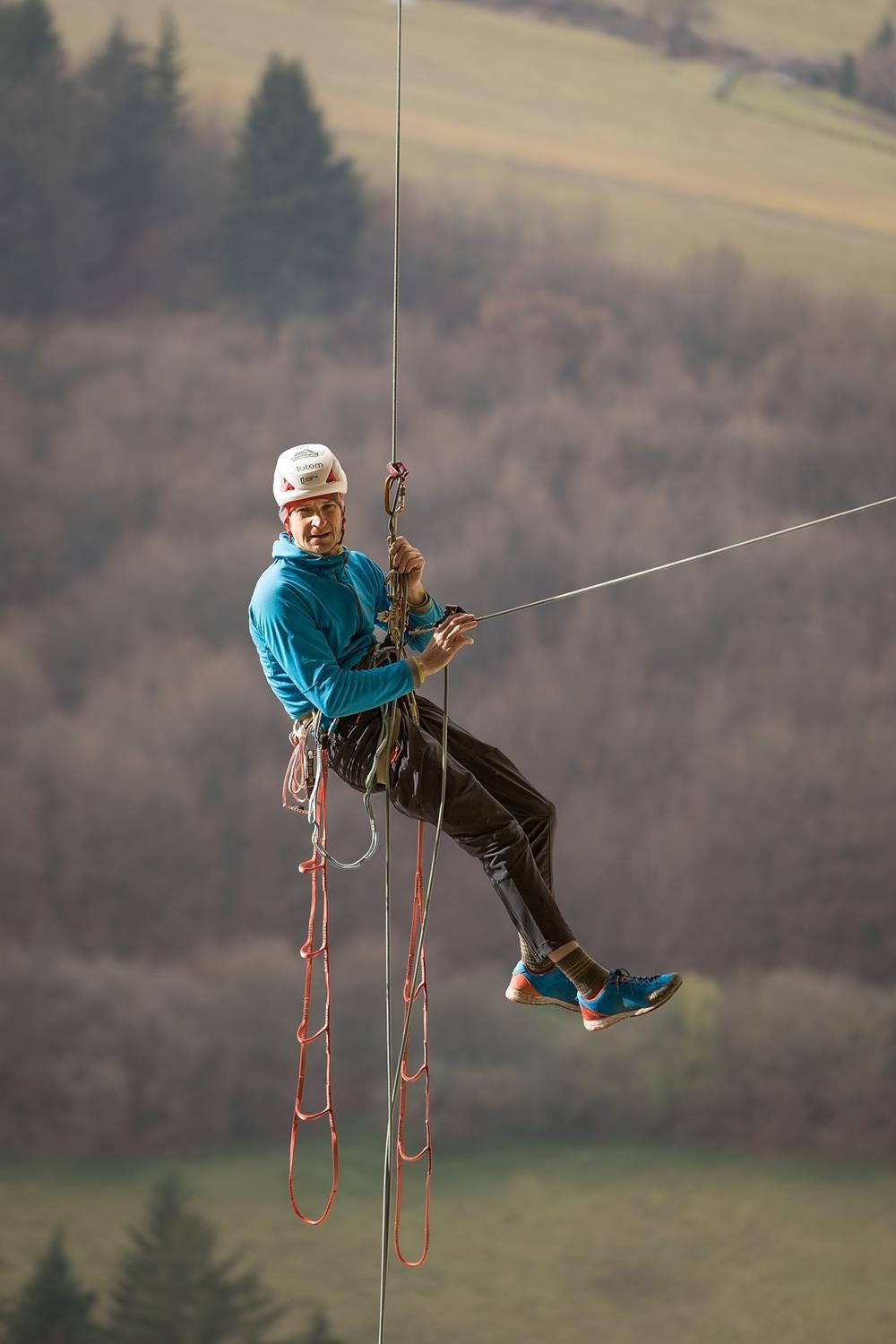
Of course, at that time I didn’t even dream of any other variant than the standardly belayed one — the holds in the route are really small. Nevertheless, in the summer no-conditions I went there on my own. For a first impression of the route I didn’t need anyone, and I didn’t want to infect anyone with my bug either. So, I went to rappel and tried Top Rope Solo (TRS).
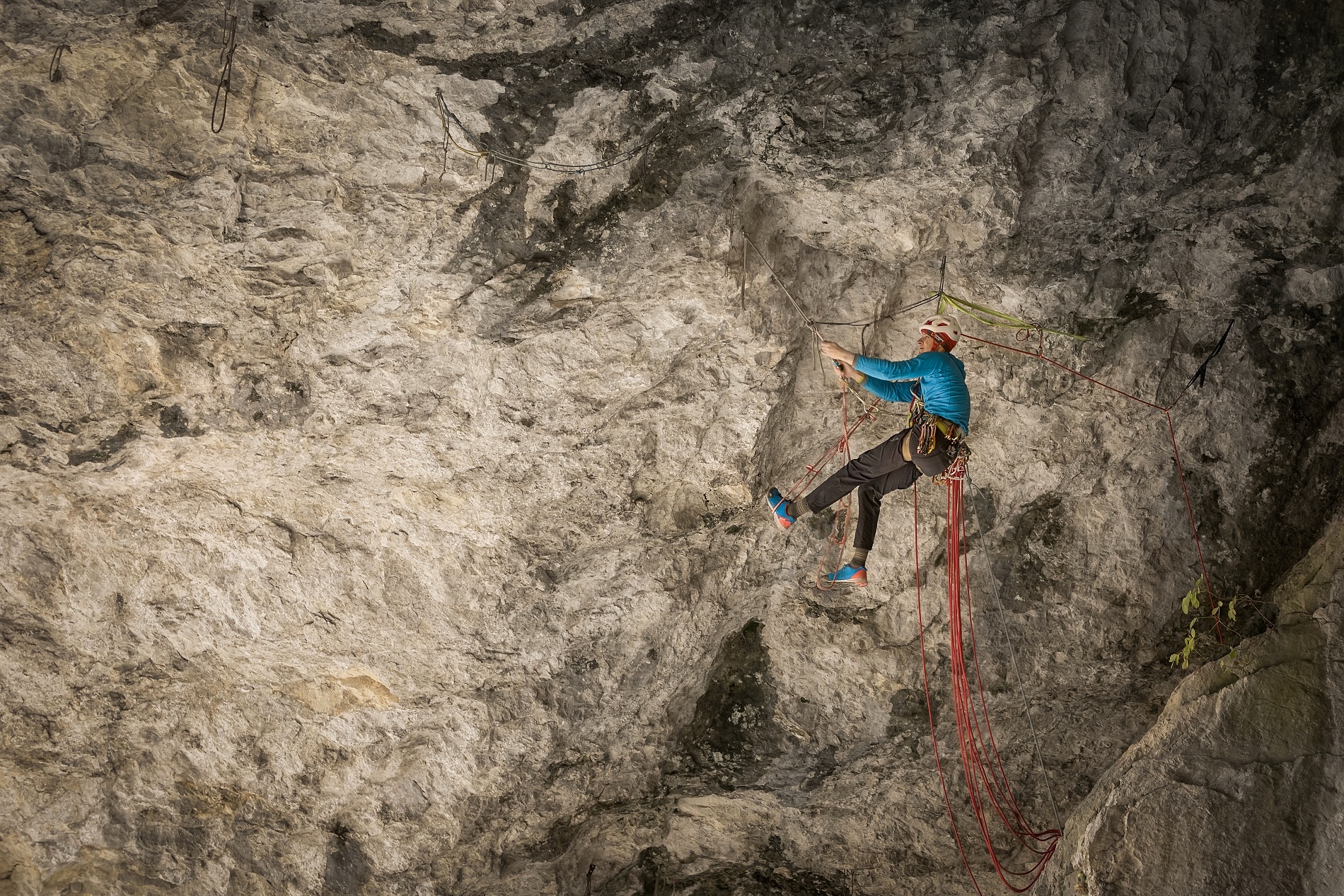
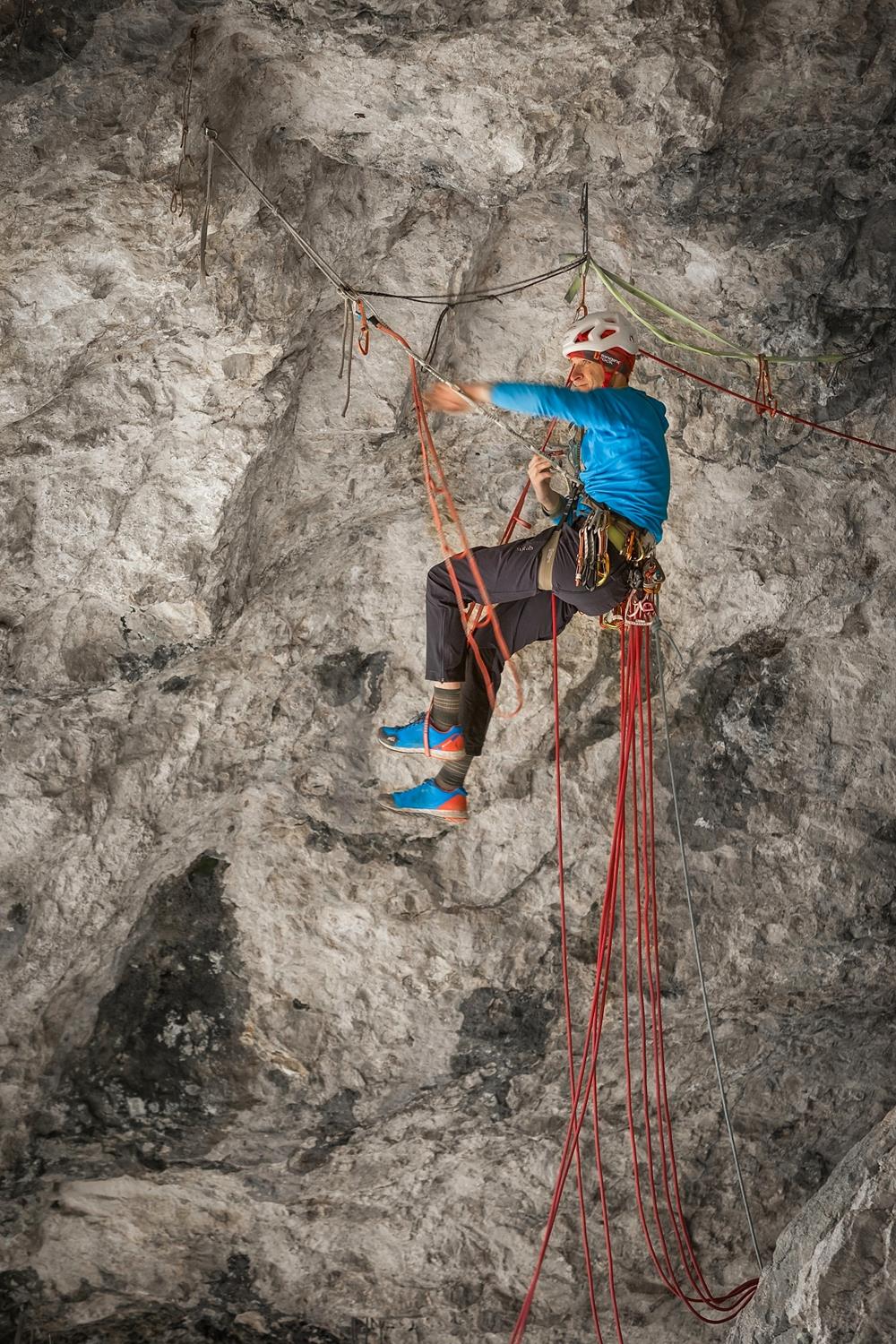
The following are used on TRS:- ascenders – the advantages are the price, no fall factor, and low weight; however, they’re not suitable for working the sequences of moves, or rather, for moving downward and for overhanging or traversing lines
- semi-automatic belay devices – the advantage is the ability to immediately return a few centimeters or a few to meters; the disadvantage is the impractical taking in of the rope while climbing
- guided fall arresters – the advantage is the ability to climb freely up and down without having to handle the device (when “gaining meters”); the disadvantage is their impracticality when practicing sequences
Back then, in that condition (I mean both my physical condition and the ambient temperatures), I didn’t even manage all the moves. However, it was quite fun bouldering with a rope, so I returned there later. And that happened several more times. Always alone, or rather TRS. But it still didn't occur to me to go it alone from the bottom. It was still preparation for climbing with a belayer. Lead Rope Solo is a completely different game than RP or PP, and despite several years of experience, it is always an individual case that may or may not have a solution. However, I was improving at it and noticed a significant crack at the bottom of the start.
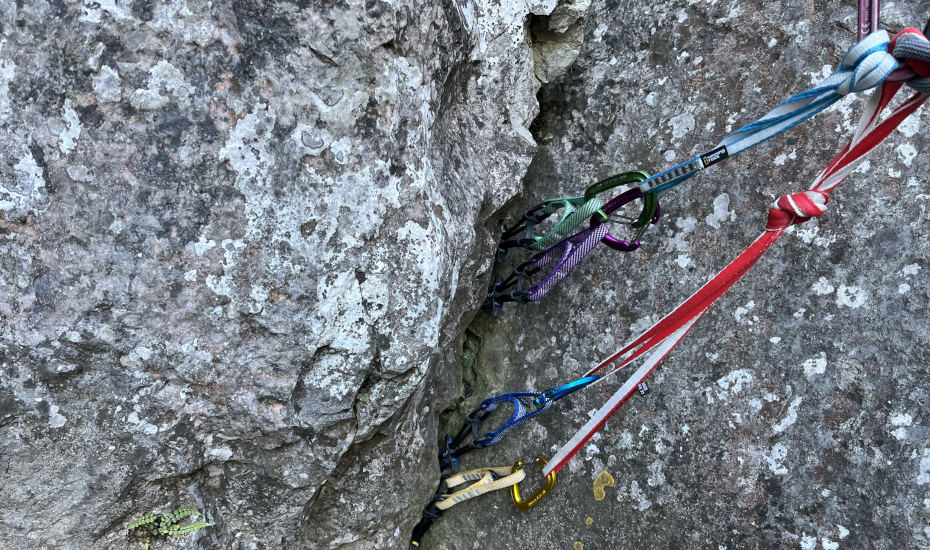 Bombproof
That crack was a sign of a possible lower anchor point, similar to my first serious solo (Zvon 8a, a three-pitch route on Kostolecký dóm, Slovkia, see this article in Czech), where there was a bolt just above the ground. On limestone you don’t always have as many options as on granite, where you’re more likely to place your own protection or not have to deal with this at all thanks to easy first pitches. The granite High Tatras are, after all, my favorite place for soloing, and I have managed to climb routes like Titanic 7b+ OS, Katarzia 8a+, and Superdiretissima 7c there.
SOLO/VE
I started the whole process in Gekón, though not on a purpose, on my own. So, it seemed logical to me to continue on my own. In the fall of 2023, I started testing whether it would be technically possible (for me) as a LRS. I tried several systems and ropes. With one unnamed belay device, I even ripped the rope sheath during a fall and remained on the cores much lower than I had expected...
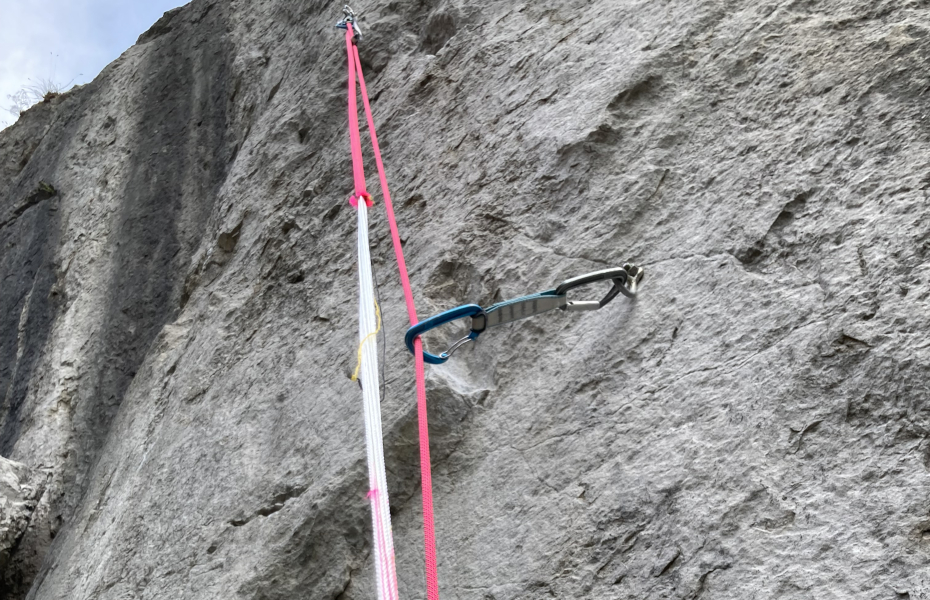
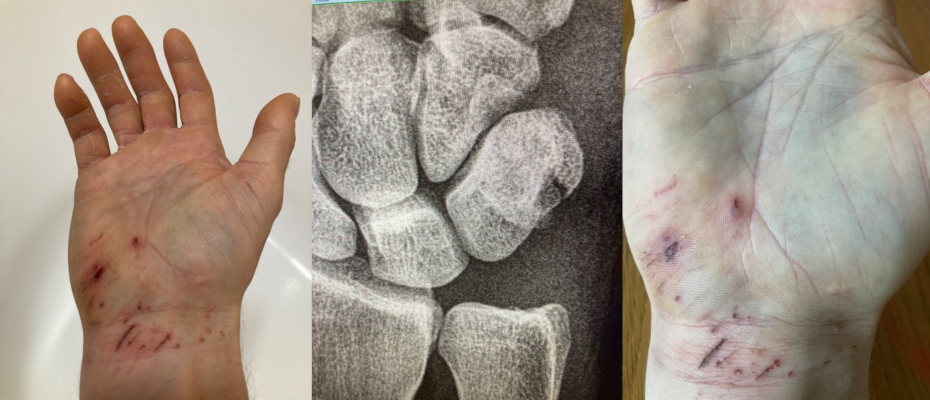
Since there is no product designed for LRS, any solution will always be a compromise. Either it will run less smoothly, which reduces the chances of success on the route, or safety will be reduced. For the sake of completeness, it is necessary to mention the long-discontinued and now “investment-grade” Silent Partner, which is only available on eBay nowadays. However, this one is still not suitable for really hard sport climbing. So I spent a long time thinking about the risk analysis. Then, because I was trying to eliminate every possible risk as much as I could, I paradoxically ended up in a situation where, after a series of tasks, I lost focus and fell a few meters to the ground while cleaning the route. I got away with just a few bruises, but unfortunately I also fractured the pisiform bone in my hand. Luckily it was a “good” fracture and I didn’t need a cast, but of course it still meant no climbing for a while.
The details for the full context – and thus for any truly relevant (internet?) discussion – would take a long time to explain. In short, my view is that if you tire the body and mind enough, anyone becomes more prone to making mistakes. And if someone claims they don’t, they simply haven’t been in that situation yet. It is, of course, possible to avoid mistakes completely – by simply not doing the activity in which they can occur… (After all, this applies to any potentially dangerous activity, such as driving a car, skiing, and so on.) However, we still want to do these activities, so we have to accept and account for the risk.
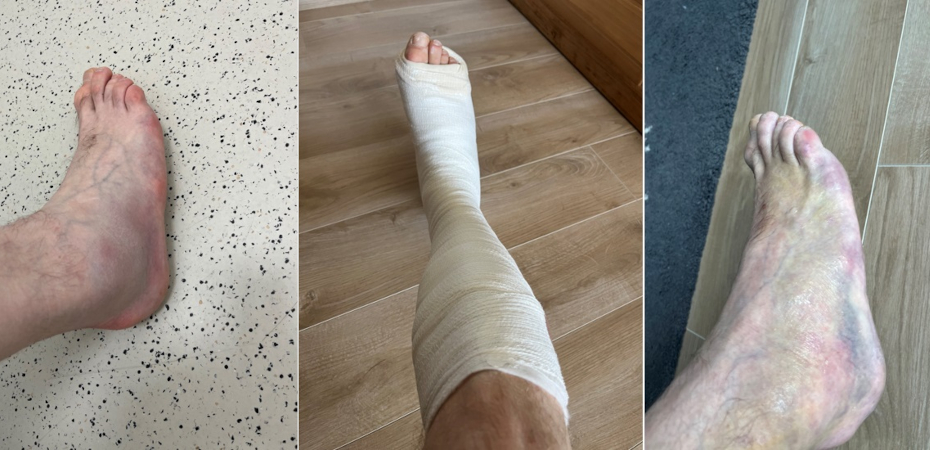
Back to climbing. Last autumn, because of an expedition to Pakistan and the stomach souvenir I brought back from it, but also because of work and other “grown‑up” reasons, I didn’t have much time to climb the route – or rather, I was fit enough to send it, but the weather wasn’t. So I turned the calendar over for the second time. At the beginning of April I was in good shape and I finally had my LRS system tuned pretty well. But it was far too cold for small holds. I reached a high point, a place where I had tested in practice, with a controlled jump, that a fall could be longer but not dangerous. However, in the two‑finger pocket I couldn’t feel my frozen/bloodless fingers at all and I fell off. Farther out from the wall than during the test. I flew in an arc and got slammed back into the wall. I rappelled down and, in pain, jumared up the prepared second rope to clean the gear. I hobbled back to the car and even managed to drive home. It turned out to be a calcaneus fracture in several pieces, but at least it didn’t require any screws or surgery. A month in a non‑weight‑bearing cast, and another one on crutches. Of course, I thought of Dave MacLeod, who also injured his ankle in a long fall on Rhapsody. A long‑term project that he later successfully managed to climb…
Cut. The first rocks I touched after the injury were a line on Malý Kežmarský štít on second, but only thanks to an e‑bike approach. On the second visit I was already swinging leads with Martin (we both climbed the crux pitches), and on the third I gave myself a mental test and climbed the Superdiretissima as a roped solo. So my head was ready, but my body wasn’t, and there was a risk I would once again miss out on those autumn conditions. Mentally, it was challenging for three reasons. First, my heel/ankle was still sensitive, and the falls were quite unpleasant (both physically and mentally). Second, I was physically ready with a reserve, but when LRS climbing, it often ends up with the rope stuck in the belay device or in backup knot in the wrong place, etc. etc. – meaning it didn’t depend only on me. And the third, less obvious reason was that it would have meant surpassing my previously highest climbing grade. Consciously, it didn't hold me back, but who knows how big a role it played subconsciously in combination with the previous reasons.
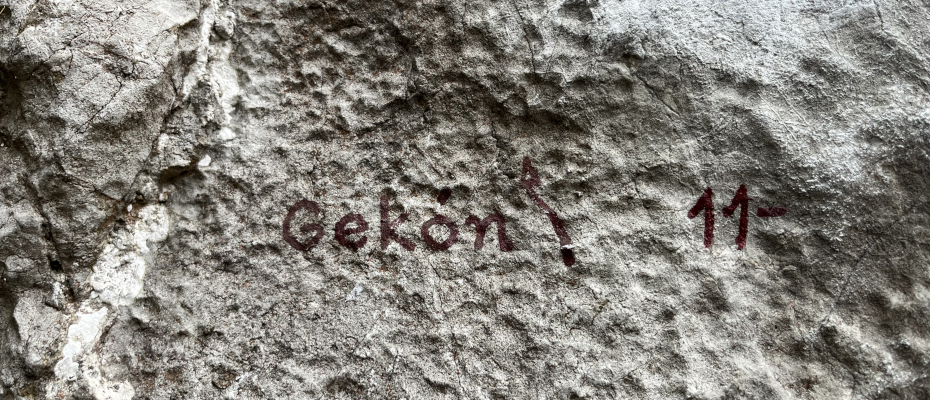 Gekón
Gekón
As for the grading itself, I cannot comment on it, as I have never been belayed on it and LRS climbing subjectively and objectively increases the difficulty. However, the number was not that important...
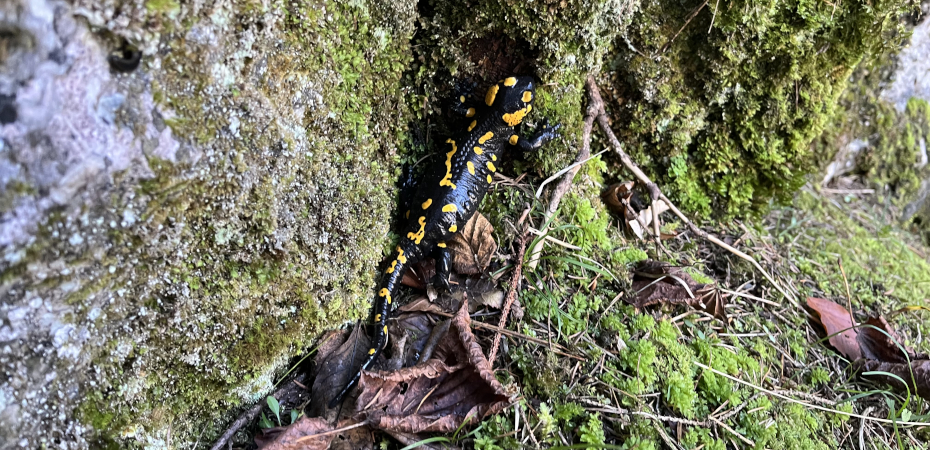 Gekón of Manín…
So, in the end, it was a relatively long and "painful" but definitely beneficial and formative process. It gave me more than it took away. No pain, no gain.
And despite I climbed it alone, a big thanks goes to my wife Martina and my children for their support.
SO/LOVE
Photo gallery: Gekón
(📸 Roman Ripka)
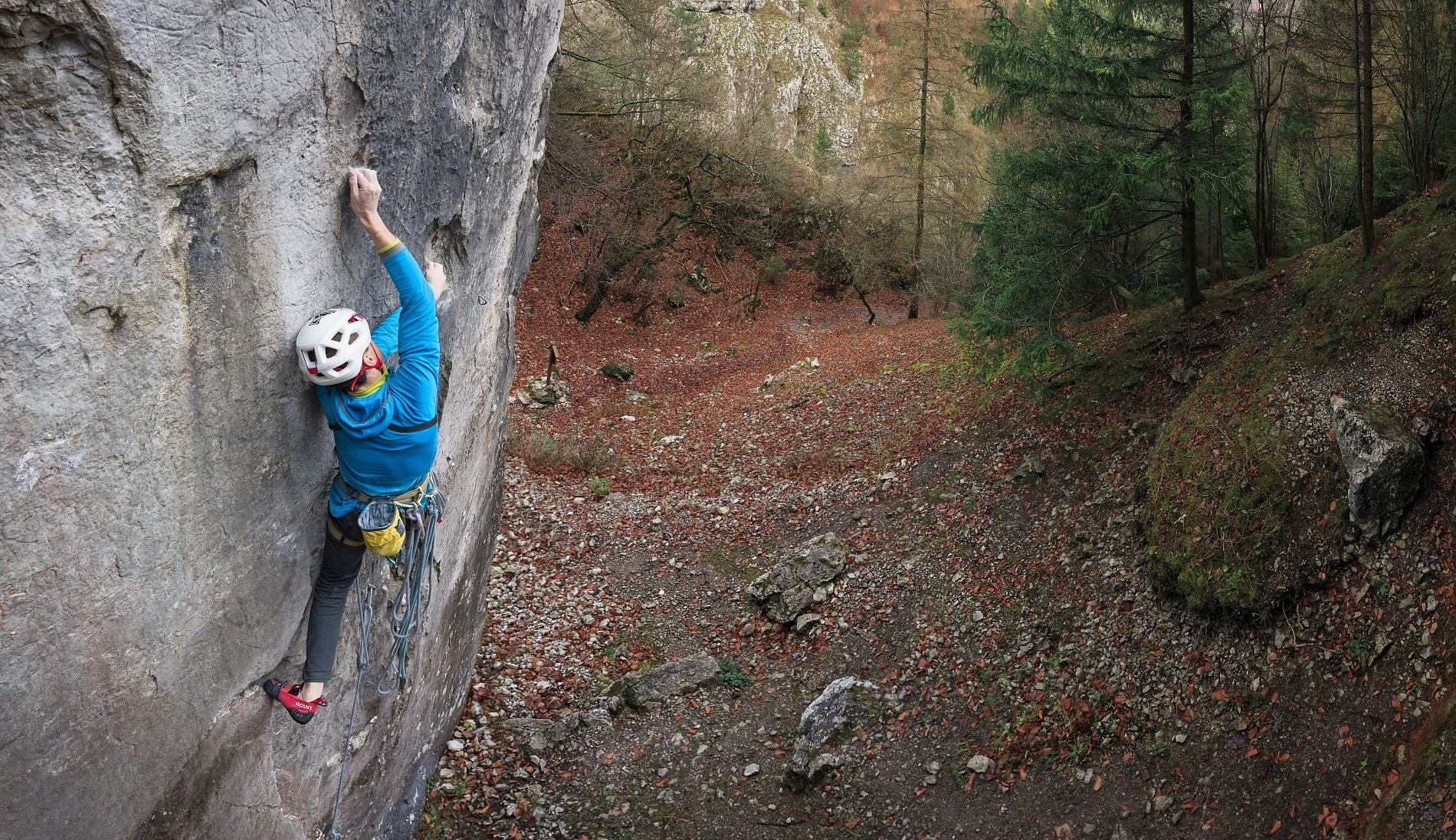
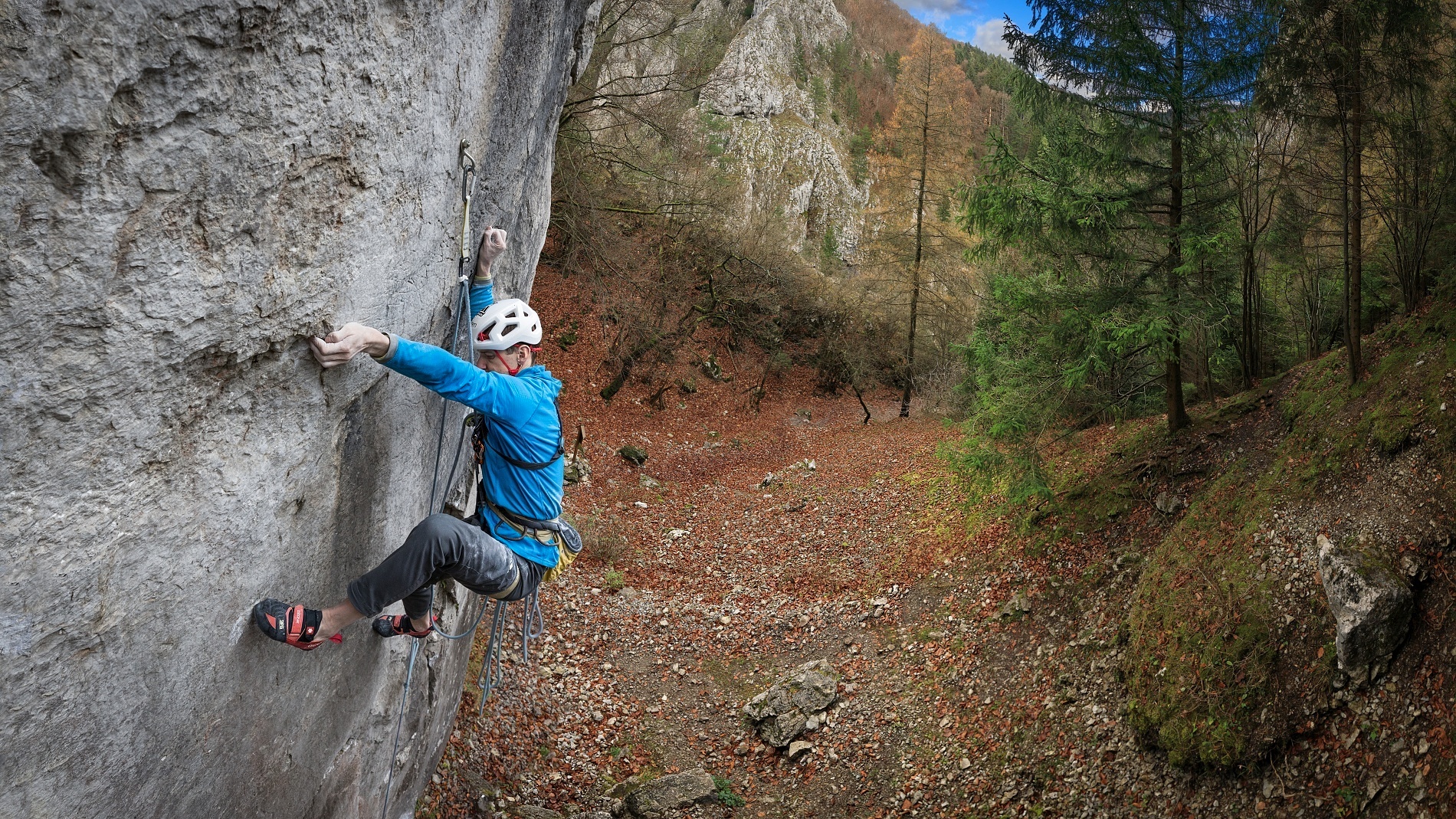
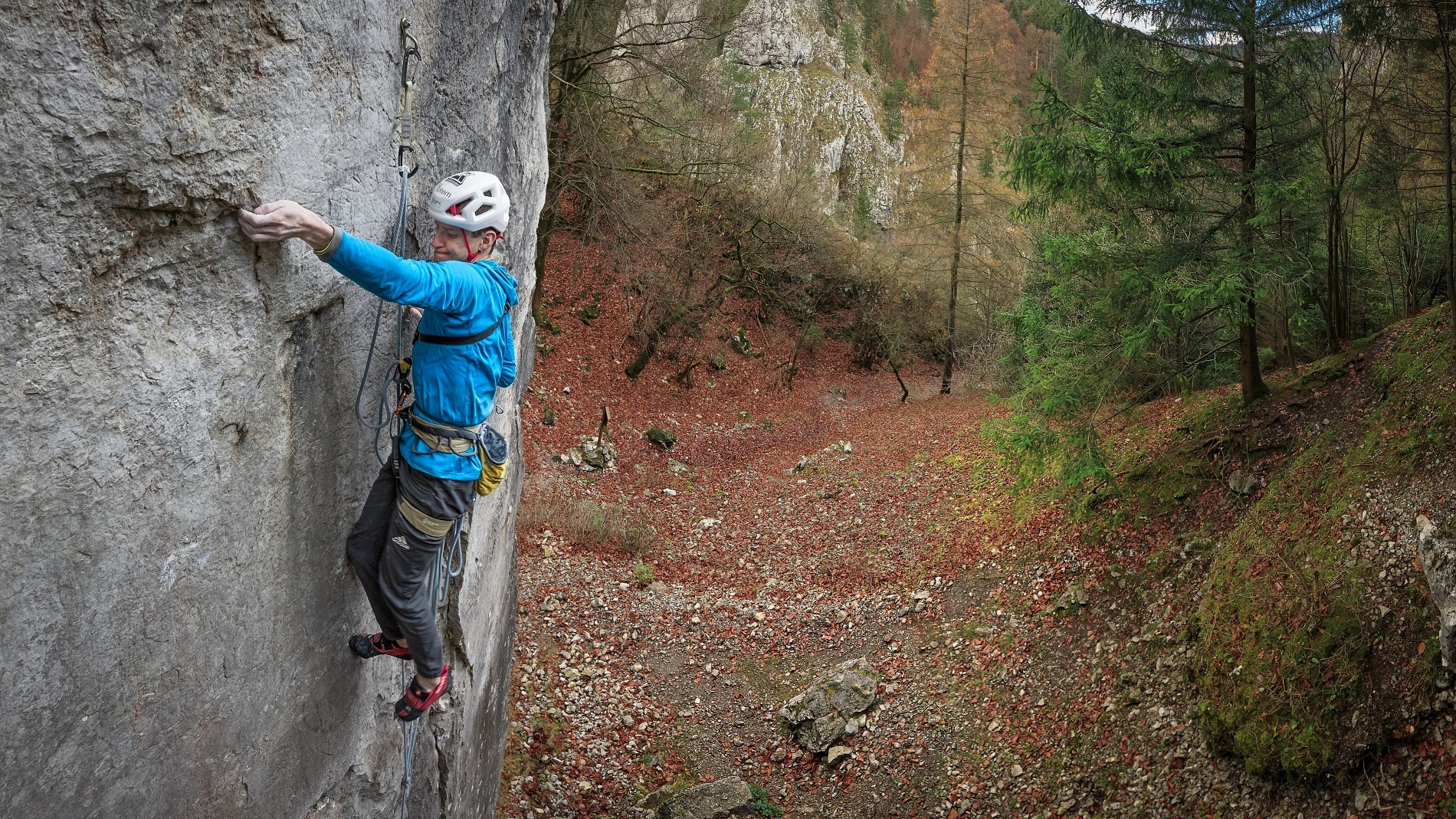
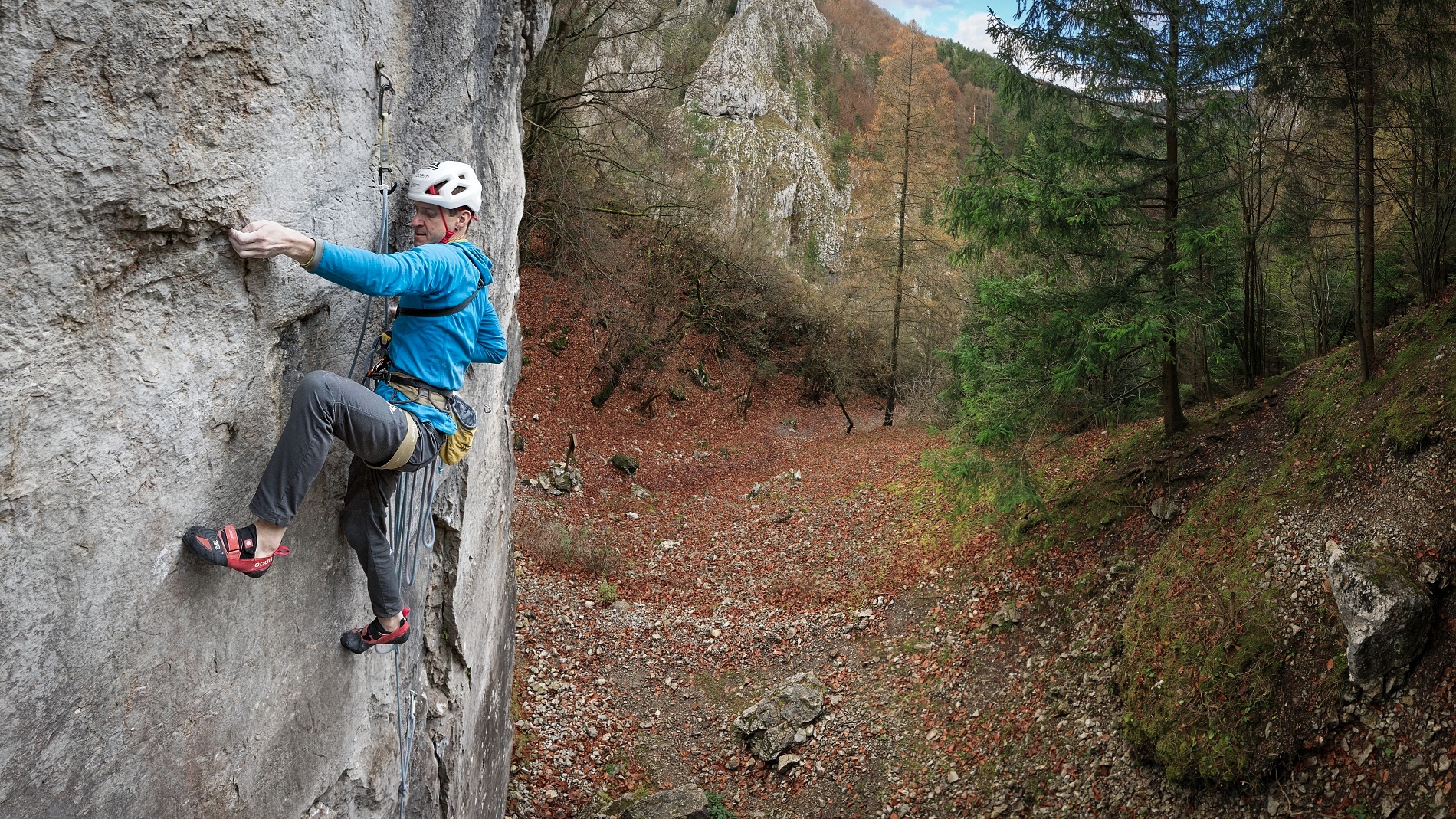
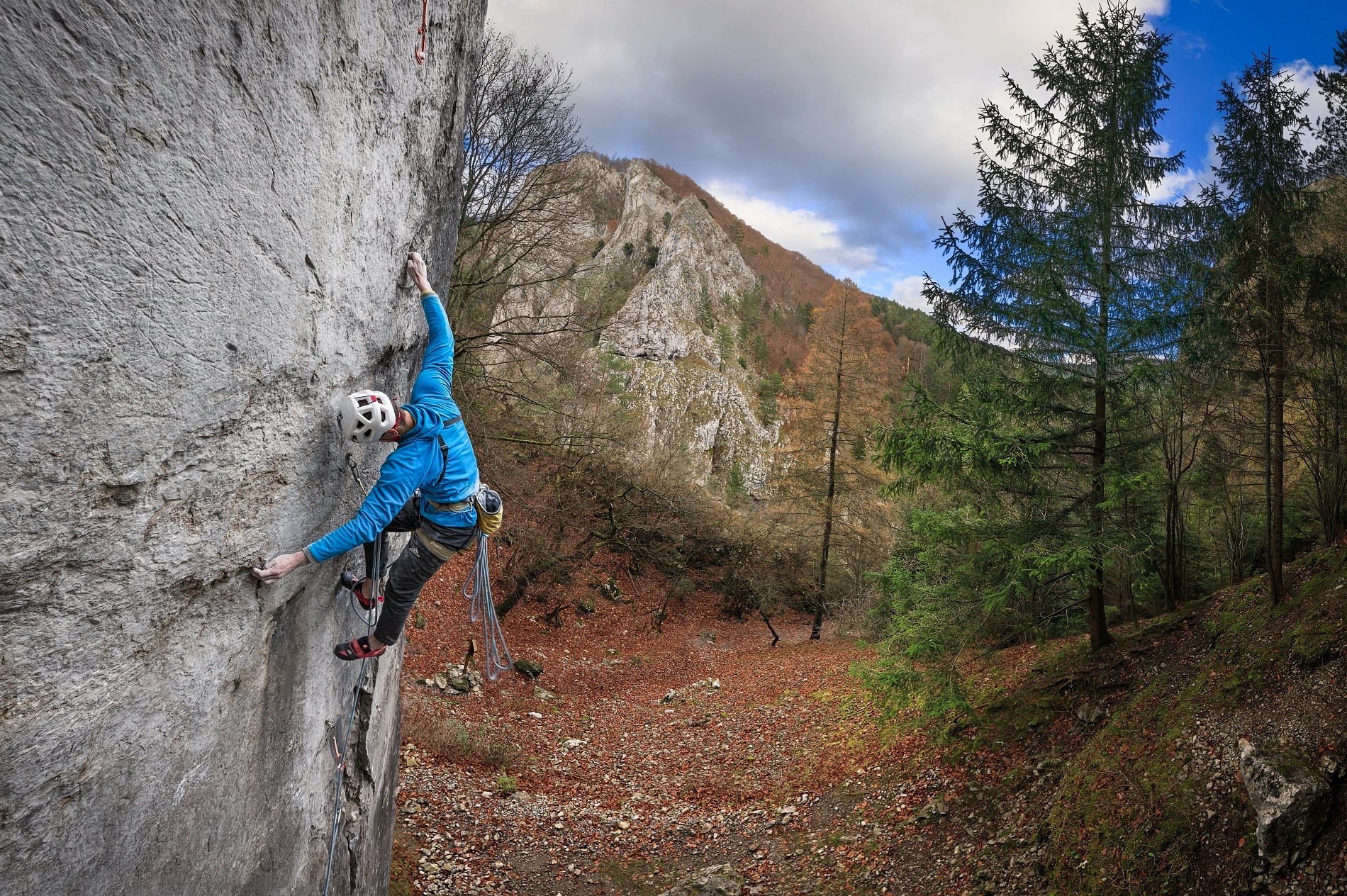
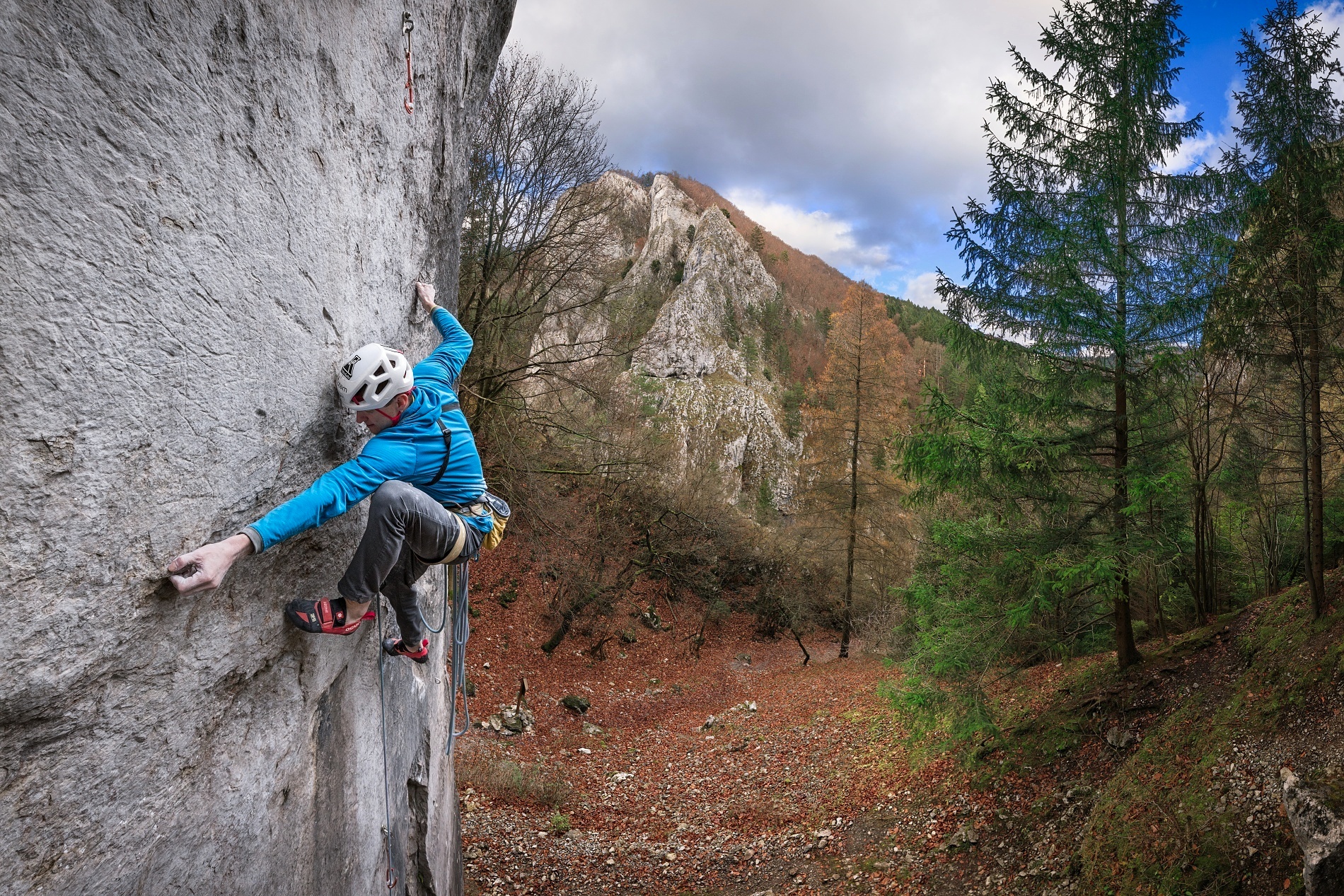
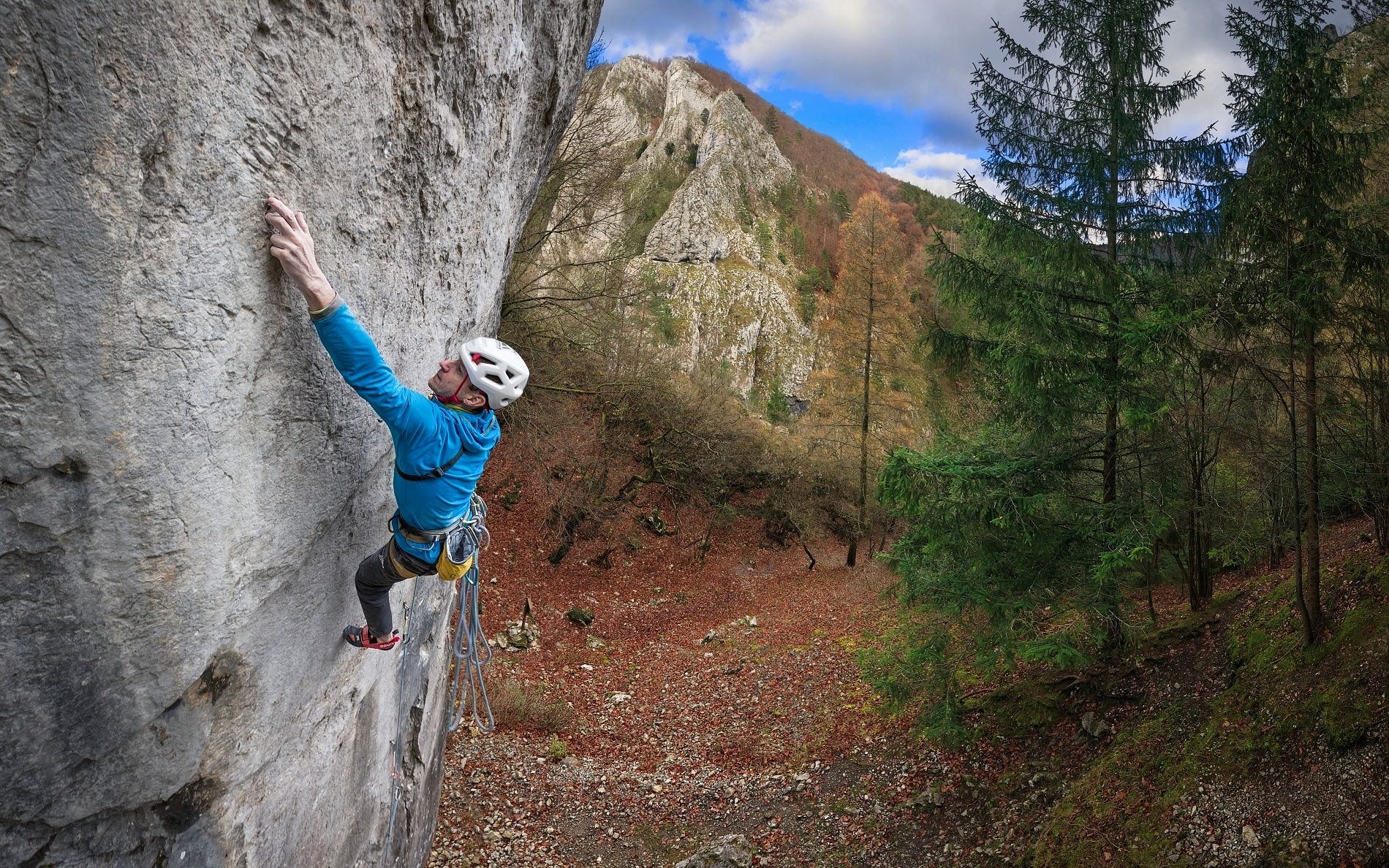

Afterword/topout: thanks also to Roman Ripka for the photos. When he met me on Gekón a week before the send and offered to take photos, I was happy to take him up on it (after the send) on the last nice day in Manín and climbed Strecha Slovenska solo "for fun." This is an old aid climb on Kostolecký Dóm 5 A3e: 5, A2, A2, 5.
Photo gallery: Strecha Slovenska
(📸 Roman Ripka)


 More
More