Search Results - all articles
For the searched phrase „s“ were found 520 products and 488 articles.Articles
Polypropylene (PP)
Thermoplastic polymer used in a wide variety of applications including packaging and labeling, textiles (e.g., ropes, thermal underwear and carpets), stationery, plastic parts and reusable containers of various types, laboratory equipment, loudspeakers, automotive components and polymer banknotes. An addition polymer made from the monomer propylene, it is rugged and unusually resistant to many chemical solvents, bases and acids. Polypropylene is the world's second-most widely produced synthetic plastic, after polyethylene.
Polystyrene
Synthetic aromatic polymer made from the monomer styrene. Polystyrene can be solid or foamed. General-purpose polystyrene is clear, hard, and rather brittle. Polystyrene is one of the most widely used plastics. Uses include protective packaging (such as packing peanuts and CD and DVD cases), containers (such as "clamshells"), lids, bottles, trays, tumblers, and disposable cutlery.
Polyvinyl chloride (PVC)
World's third-most widely produced synthetic plastic polymer, after polyethylene and polypropylene. PVC comes in two basic forms: rigid and flexible. The rigid form of PVC is used in construction for pipe and in profile applications such as doors and windows. It is also used for bottles, other non-food packaging, and cards (such as bank or membership cards). In flexible form, it is used in plumbing, electrical cable insulation, imitation leather, signage, phonograph records, inflatable products, and many applications where it replaces rubber.
Ripstop
Woven fabrics, using a special reinforcing technique that makes them resistant to tearing and ripping. During weaving, (thick) reinforcement threads are interwoven at regular intervals in a crosshatch pattern. Advantages of ripstop are the favourable strength-to-weight ratio and that small tears can not easily spread.

InterCore
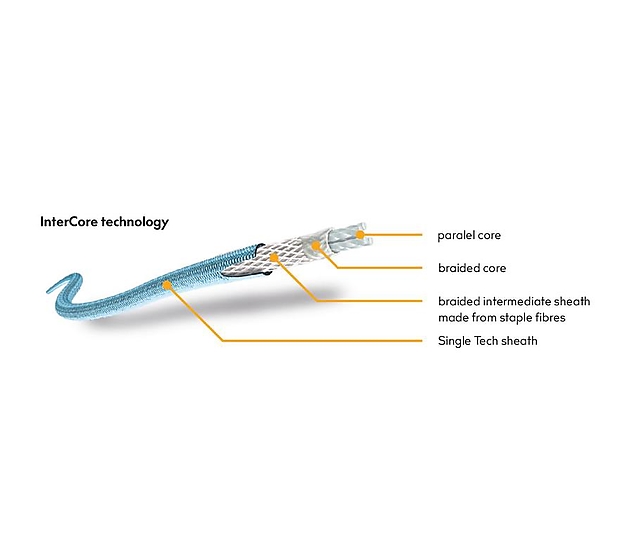
The unique patented technology providing maximum safety even in case of a damaged sheath. The rope is made from 4 layers of parallel core filaments, braided core, braided intermediate sheath made from staple fibres and single tech sheath. picture >>

Half rope
Marking of half rope for mountaineering, multipitch and ice climbing. Individual strands of rope are used in alternation in the protection system. This system reduces the risk of rope breakage caused by falling stones, and provides maximum safety in alpine conditions and for difficult climbs.

Twin rope
Marking of twin ropes for mountaineering, multipitch and ice climbing. Pairs of the same type of rope are always used, sharing the same protection points. Twin ropes guarantee a high level of safety, especially for multipitch climbing in alpine conditions.

Rock&Lock
Patented smart buckle used on SINGING ROCK harnesses and other products enables to lock and open very quickly. more >>

UIAA
Products marked with this symbol meet strict UIAA safety requirements. The UIAA is the International Mountaineering and Climbing Federation. In most cases, UIAA require-ments are sometimes stricter than EN standards.

Route 44
SINGING ROCK patented technology for rope production. A rope is produced on a 44-carrier machine which provides great handling, low weight and durability. more >>

UIAA Water repelent
A standard for water repellent ropes approved by the UIAA Safety Commission. To pass the test at a certified laboratory, the amount of absorbed water must not be greater than 5% of the rope’s weight. more>>
Acryl
Lightweight, soft, and warm, with a wool-like feel fabrics or yarn. Strong and warm, acrylic fiber is often used for sweaters and tracksuits and as linings for boots and gloves, as well as in furnishing fabrics and carpets. It is manufactured as a filament, then cut into short staple lengths similar to wool hairs, and spun into yarn.